At a Glance
About Hamamoto
Hamamoto opened in 2021 at 58 Tras Street, a discreet Tanjong Pagar shophouse tucked behind an intentionally nondescript door. It is the culmination of Chef Kazuhiro Hamamoto's two-decade journey across Kyoto, Tokyo, and Singapore — a deeply personal expression of his belief that food replenishes the soul and that dining at its highest form is about harmony and connection between people. The restaurant earned its first Michelin star in 2022 and has retained it every year since, cementing its place among Singapore's most celebrated Japanese restaurants.
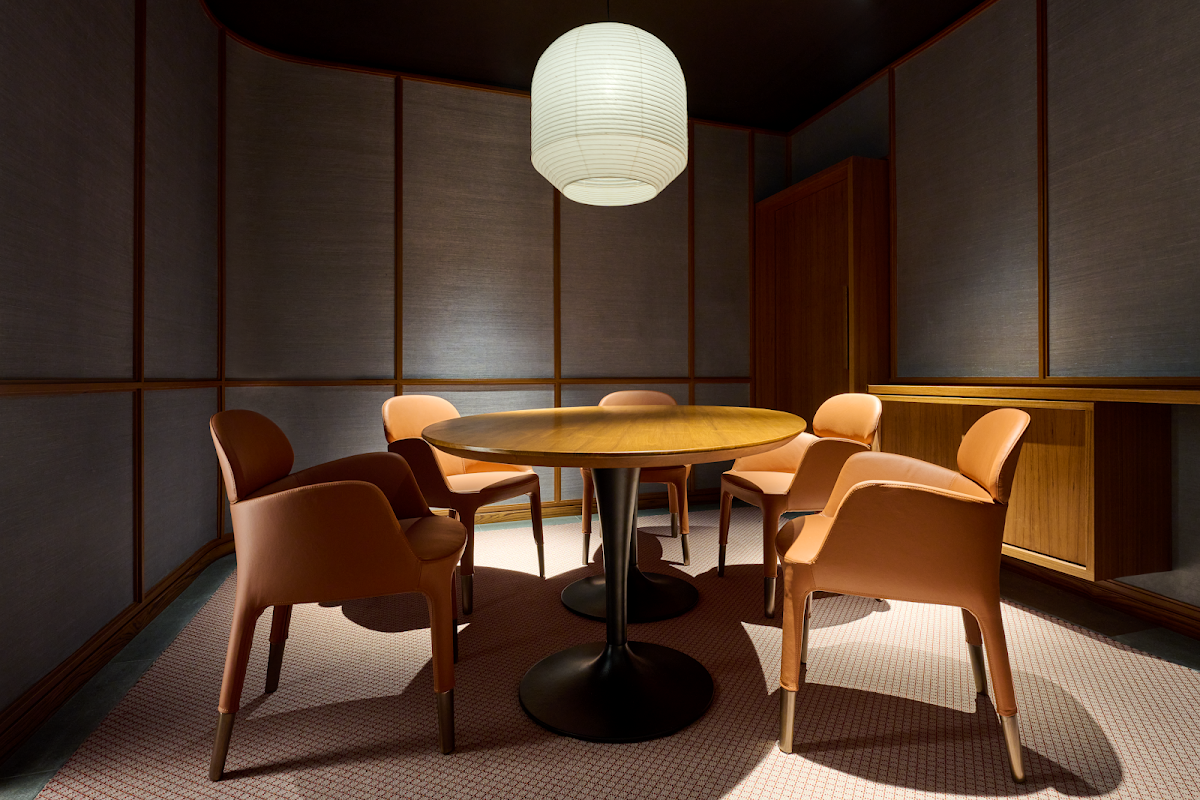
The dining room is purposefully spare — dark, hushed, and designed so that nothing competes with the food on the counter. The centrepiece is the 12-seat curved hinoki cypress counter, the only one of its kind in Singapore. Its curve is not decorative but functional: it allows guests to see one another and the chef simultaneously, fostering the sense of communal experience that Chef Hamamoto sees as inseparable from Japanese dining. A private dining room seating up to five is available for those who prefer seclusion, but the counter is unquestionably the experience Hamamoto was built for.
What defines Hamamoto is an obsessive attention to ingredients at their seasonal peak. Chef Hamamoto's philosophy is to understand the complete life cycle of every ingredient he works with, using each only at the precise moment its flavour is at its most expressive. Fish arrives from Tokyo's Toyosu Market, selected personally through a network of trusted suppliers built over decades. During winter, the restaurant's most celebrated dish emerges: matsuba gani, adult male snow crabs from the Sea of Japan. Chef Hamamoto shells the crab legs at the counter before poaching them for mere seconds in a dashi broth that has been kept brewing continuously since the restaurant opened — a living stock that deepens with each passing season. The sushi course features nigiri dressed with either red vinegar (akazu) or rice vinegar, chosen to complement the character of each specific fish. This is not a restaurant that follows a fixed script; the menu responds to what the ocean and the seasons provide.
Compass Verdict
Intimate omakase counter where Chef Hamamoto serves seasonal edomae sushi with meticulous care. The fish quality and rice work are at a level that justifies the price. One of Tanjong Pagar's most respected sushi destinations. For those who understand that omakase is about trust.
Recommended For
Menu & Pricing
Hamamoto serves an omakase menu that changes with the seasons. Prices are approximate and vary based on seasonal ingredients. All prices are subject to service charge and GST.
| Course | Description | Price |
|---|---|---|
| Lunch Omakase | Seasonal kappo courses + nigiri sushi course. Single sitting. | ~S$300++ |
| Dinner Omakase | Extended seasonal menu — full kappo experience with signature courses, nigiri sushi, matsuba crab (in season). | ~S$350–500++ |
| Sake Pairing | Curated sake selection to complement each course. Enquire at reservation. | Add-on |
| Private Room | Seats up to 5. Same omakase menu in a secluded setting. | Same price |
The Hamamoto Experience
The Entrance — Designed to Disappear
On Tras Street, you walk past a nondescript shophouse door that gives nothing away. There is no flashy signage, no window display, no hint of the Michelin star waiting inside. This is intentional. Hamamoto is a restaurant that reveals itself only to those who seek it. Step through the door and the outside world falls away — the dining room is dark, quiet, and focused entirely on the counter in front of you. The atmosphere is not solemn but hushed, in the way that a temple or a tea ceremony space is hushed. You are being prepared for something.
The Curved Counter — Connection by Design
Twelve seats curve around a single chef. You can see every other guest. You can see Chef Hamamoto's hands. This is the only curved sushi counter in Singapore, and the shape is not aesthetic whimsy — it is a deliberate architectural choice rooted in Chef Hamamoto's philosophy that great dining is a shared human experience. At a straight counter, you look only forward. At a curved counter, you become part of a circle. The hinoki wood is brushed, not lacquered, and carries a quiet fragrance of Japanese cypress that blends with the subtle scent of vinegared rice.
The Kappo Courses — Before the Sushi
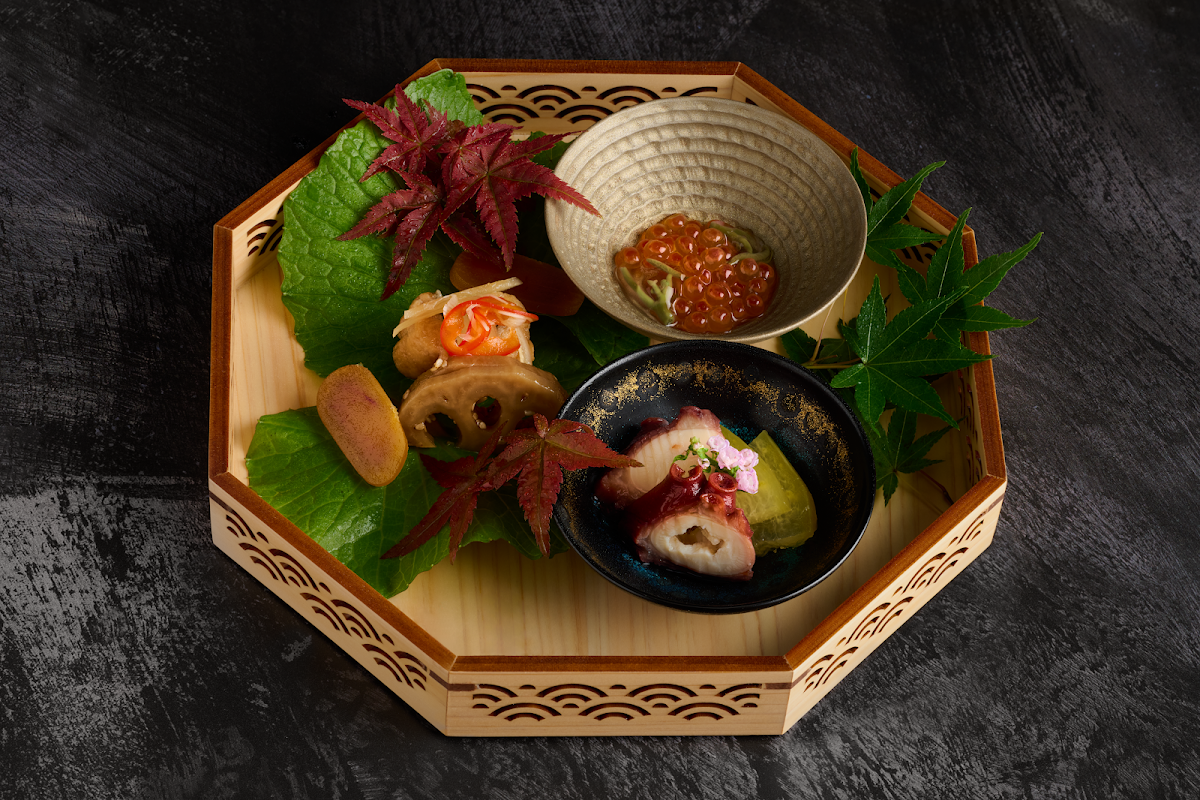
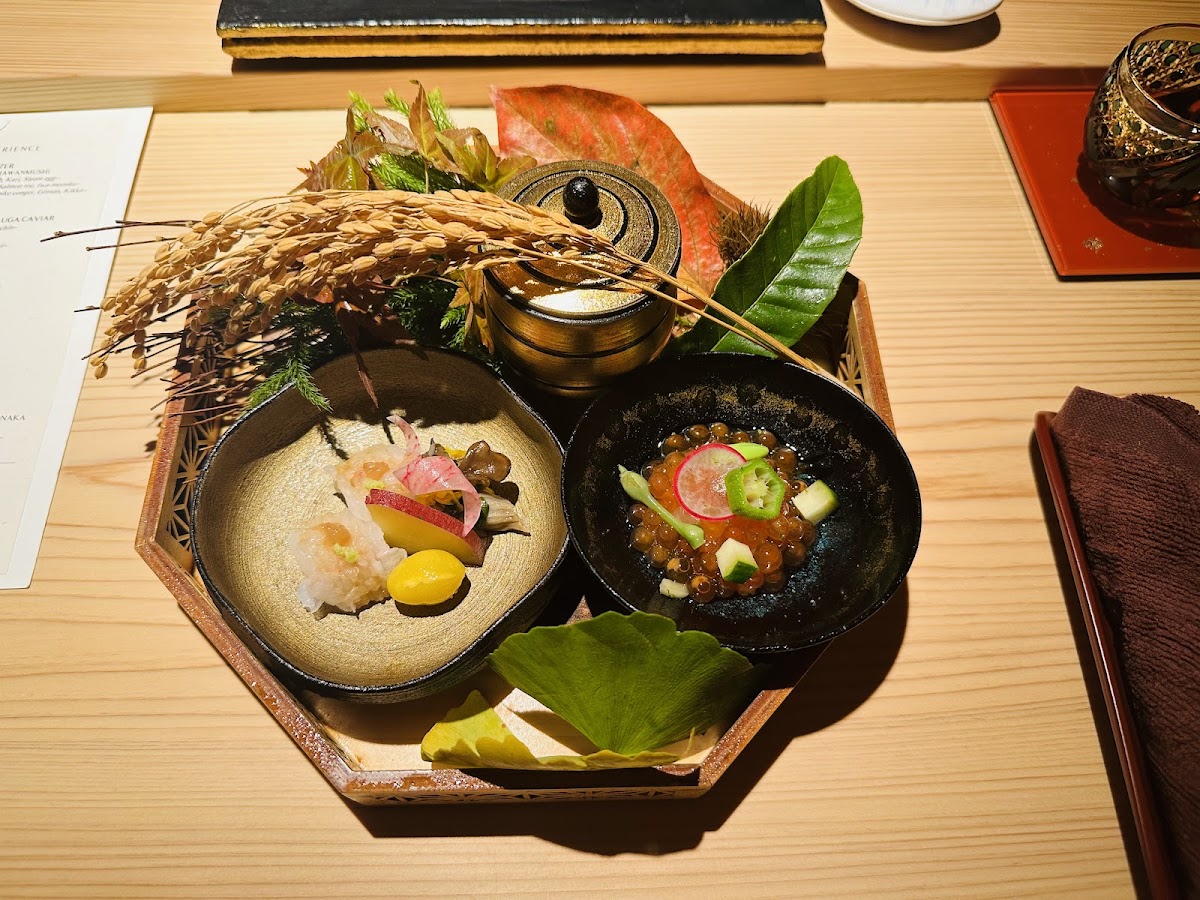
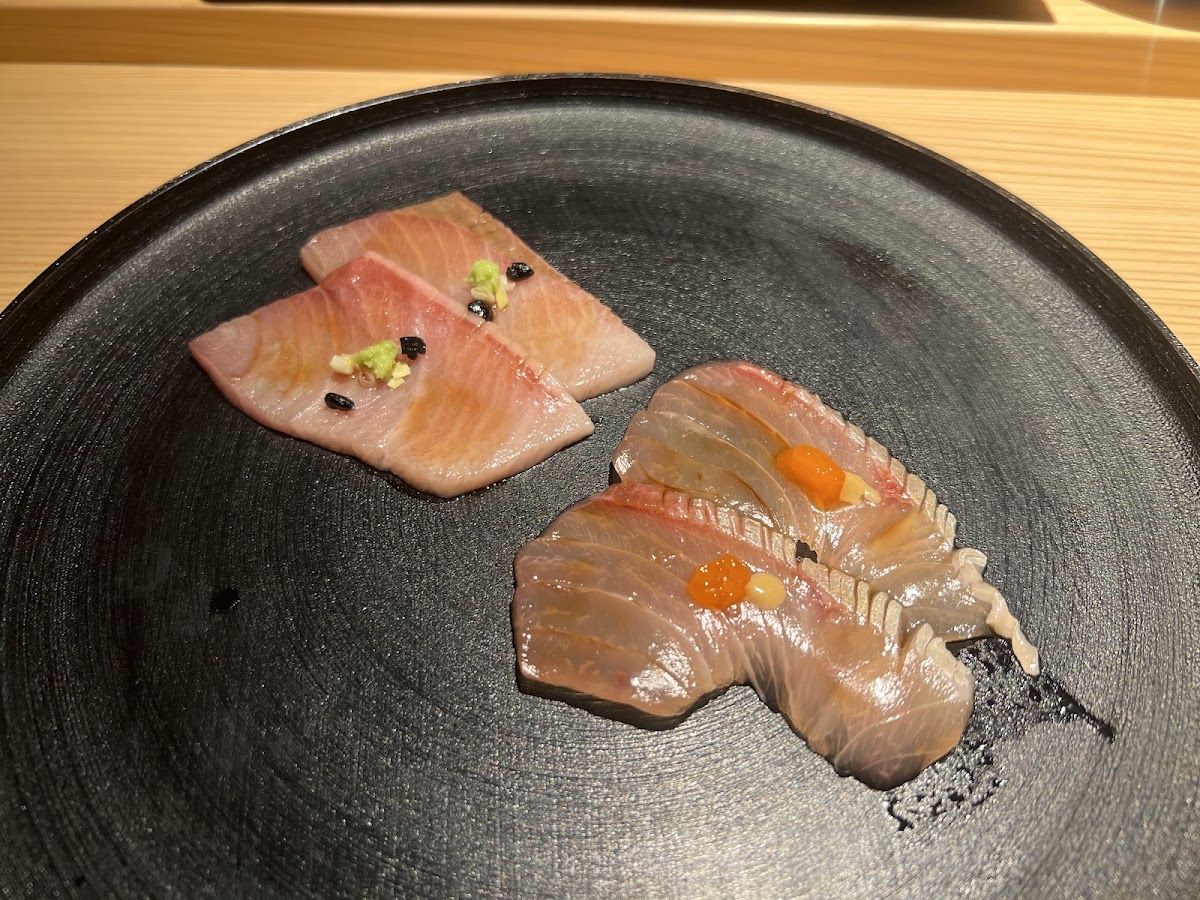
Before the nigiri begins, Hamamoto unfolds a sequence of kappo courses that demonstrate the breadth of traditional Japanese cooking techniques: grilled, simmered, steamed, cured, smoked. These are not mere preludes to sushi — they are complete dishes in themselves, each expressing a different dimension of the season's ingredients. A smoked meji-maguro might appear alongside spiny lobster with sea urchin. The dashi that has been brewing since opening day may surface in a delicate chawanmushi. Every course is calibrated: nothing excessive, nothing lacking, each portion precisely the right size to satisfy without filling.
The Nigiri — Two Vinegars, One Philosophy
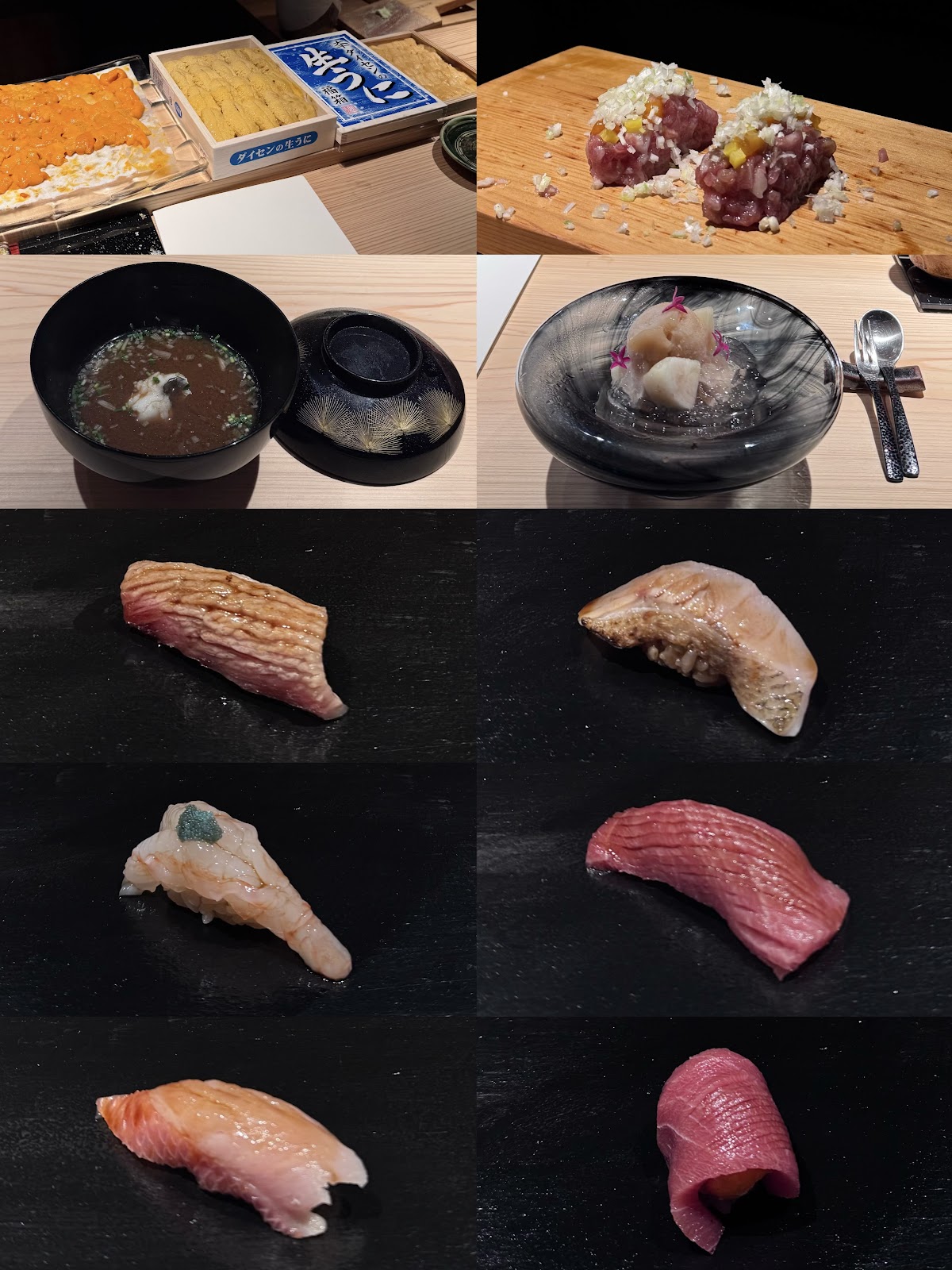
When the sushi course arrives, each piece of nigiri is dressed with either red vinegar (akazu) or rice vinegar — a choice that is not random but determined by the character of the specific fish on that piece. Red vinegar brings depth and savouriness that pairs with fattier cuts like chutoro and nodoguro. Rice vinegar brings a cleaner, brighter acidity that lifts lighter fish like hirame and kohada. Chef Hamamoto makes this decision for every single piece, and it changes with the season as the fat content and flavour profile of each fish evolves.
Matsuba Gani — The Winter Ritual
If you visit during the winter months, you may witness what many consider the most memorable single dish in Singapore's Japanese dining scene. Matsuba gani — adult male snow crabs from the Sea of Japan — arrive whole. Chef Hamamoto shells the legs at the counter with the quiet efficiency of a craftsman who has done this thousands of times. The flesh is poached for only seconds in that legendary house dashi, just long enough to warm it through without losing its sweetness and delicate texture. It is a dish that requires no embellishment, no reduction, no foam — just impeccable ingredients handled with supreme restraint.
Practical Information
Sun–Mon: Closed
Dietary Information
Tanjong Pagar — Singapore's Japanese Food Capital
The Neighbourhood
Tanjong Pagar holds the highest concentration of Japanese restaurants in Singapore, with over 45 establishments packed into the streets around Tras Street, Craig Road, and Duxton Hill. The area has been a magnet for Japanese chefs since the 1990s, drawn by the shophouse architecture, proximity to the business district, and a deep well of Japanese expatriate diners who demand authenticity. Today it ranges from Michelin-starred omakase counters to late-night ramen bars, making it the most complete Japanese dining neighbourhood in Southeast Asia.
How to Get Here
Hamamoto is a 5-minute walk from Tanjong Pagar MRT (East-West Line, Exit A). Walk along Tras Street towards the shophouses — the entrance is discreet, at number 58 on the left side. For driving, the nearest parking is at Guoco Tower (Wallich Residence), Tanjong Pagar Centre, or International Plaza. After dinner, the neighbourhood is excellent for a post-meal walk through the lit shophouses of Duxton Hill and Craig Road.
Insider Tips — Dining at Hamamoto
Book as early as possible — Hamamoto routinely fills weeks in advance, especially for dinner. If you cannot get a dinner reservation, lunch is a slightly more accessible alternative at a somewhat lower price point, and the quality of ingredients is identical. Ask about the sake pairing. For the matsuba crab experience, visit between November and March. First-timers should choose the dinner omakase for the complete kappo + sushi experience. Do not wear strong perfume. Arrive on time: with a single sitting format, latecomers disrupt the pacing of the entire table.
Comparing Tanjong Pagar Omakase Options
| Restaurant | Style | Seats | Dinner Price |
|---|---|---|---|
| Hamamoto | Sushi-Kappo · Michelin 1★ | 12 + 5 | S$350–500++ |
| Miraku | Omakase · Sushi | — | S$80–150++ |
| Teppei | Sushi · Izakaya | — | S$50–100++ |
| Ippudo | Hakata Ramen | — | S$16–25 |
Editor's Note
Hamamoto is not the most expensive omakase in Singapore, nor the flashiest. It is one of the quietest, most sincere, and most ingredient-driven. Chef Hamamoto's obsession with seasonality is not marketing language — it is the operating principle of every decision in the kitchen. The curved counter creates a dining atmosphere unlike any other sushi restaurant in the city, and the matsuba crab experience during the winter months is genuinely one of the finest single dishes available in Singapore's entire restaurant scene. This is a restaurant for people who have eaten at many good sushi restaurants and are looking for something that goes deeper. Book for dinner if you can. Sit at the counter. And do not rush.