Man Man Japanese Unagi Restaurant
At a Glance
About Man Man Japanese Unagi
Man Man Japanese Unagi Restaurant is one of Singapore's most celebrated Japanese restaurants, tucked into a charming ground-floor shophouse at 1 Keong Saik Road in the heart of Chinatown's trendiest dining strip. Founded by Chef Teppei Yamashita — the culinary entrepreneur who pioneered the affordable omakase movement in Singapore — Man Man was one of the first restaurants in the country to import live freshwater eels from Japan and grill them on-demand. The restaurant earned a Michelin Bib Gourmand in 2017, cementing its reputation as one of the best unagi experiences in Southeast Asia.
What makes Man Man fundamentally different from typical unadon restaurants is the live eel. Large orange tanks greet you at the entrance, filled with juvenile eels imported from Japan's Mikawa Isshiki region — widely regarded as the best freshwater eel source in Japan. Each eel is prepared on-demand: cut, gutted, skewered on bamboo sticks, and charcoal-grilled by Chef Nakagawa, who brings over 20 years of experience from Japanese unagi specialty shops. You can watch the entire process through a glass partition from your counter seat — seeing the eel still squirming as it is expertly handled is a visceral demonstration of freshness that no amount of marketing can replicate.
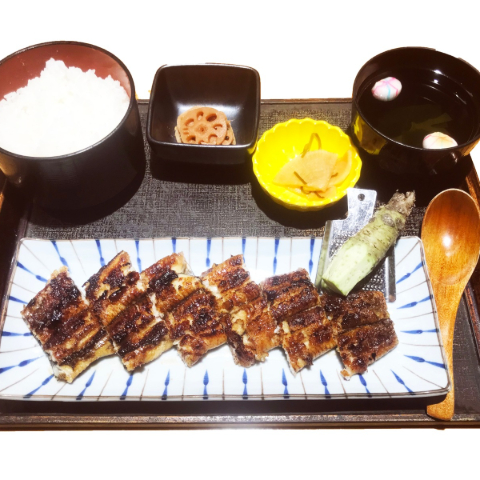
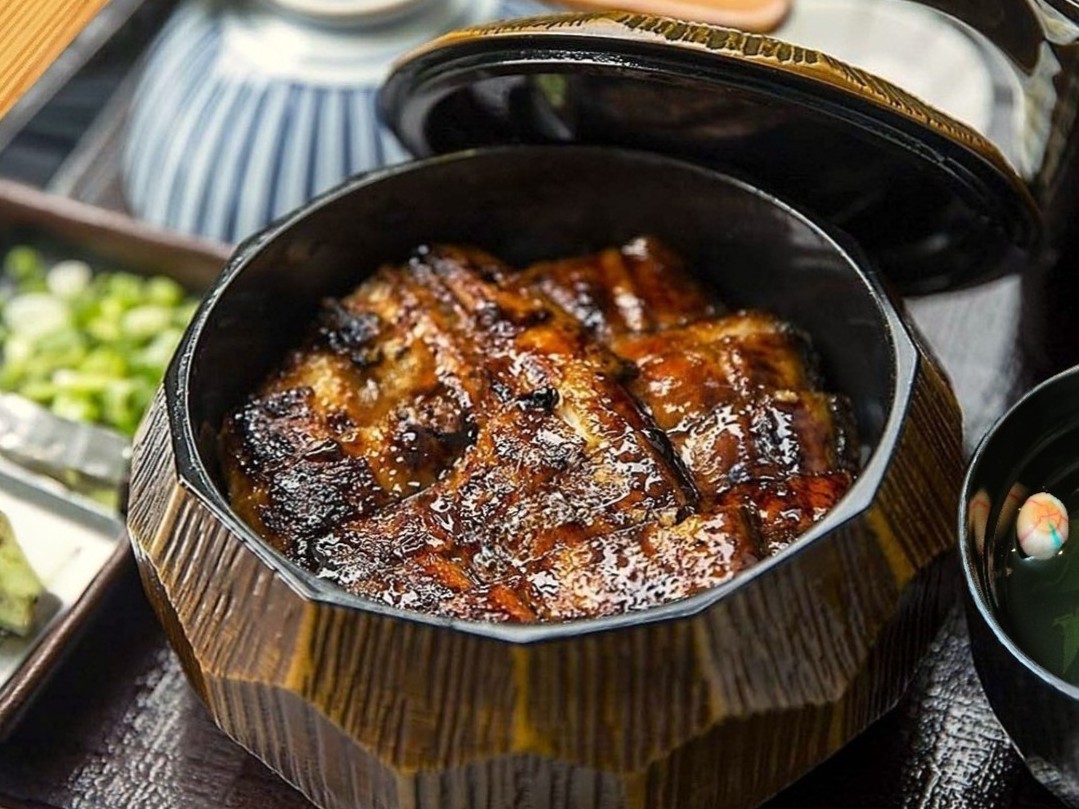
The grilling process is a study in patience and precision. The silky white eel flesh is held by skewers and laid over a bed of glowing white coals. Chef Nakagawa monitors each piece, flipping at precise intervals and dipping repeatedly into a vault of tare — a rich sauce of soy, mirin, and sugar that has been built up over countless grillings. Between dips, he fans the coals to raise the temperature, creating that characteristic crispy-charred skin that contrasts beautifully with the tender, creamy flesh underneath. The result is unagi that is genuinely world-class: tender and rich inside, crispy and caramelised outside, with a depth of flavour that pre-grilled or frozen eel simply cannot achieve.
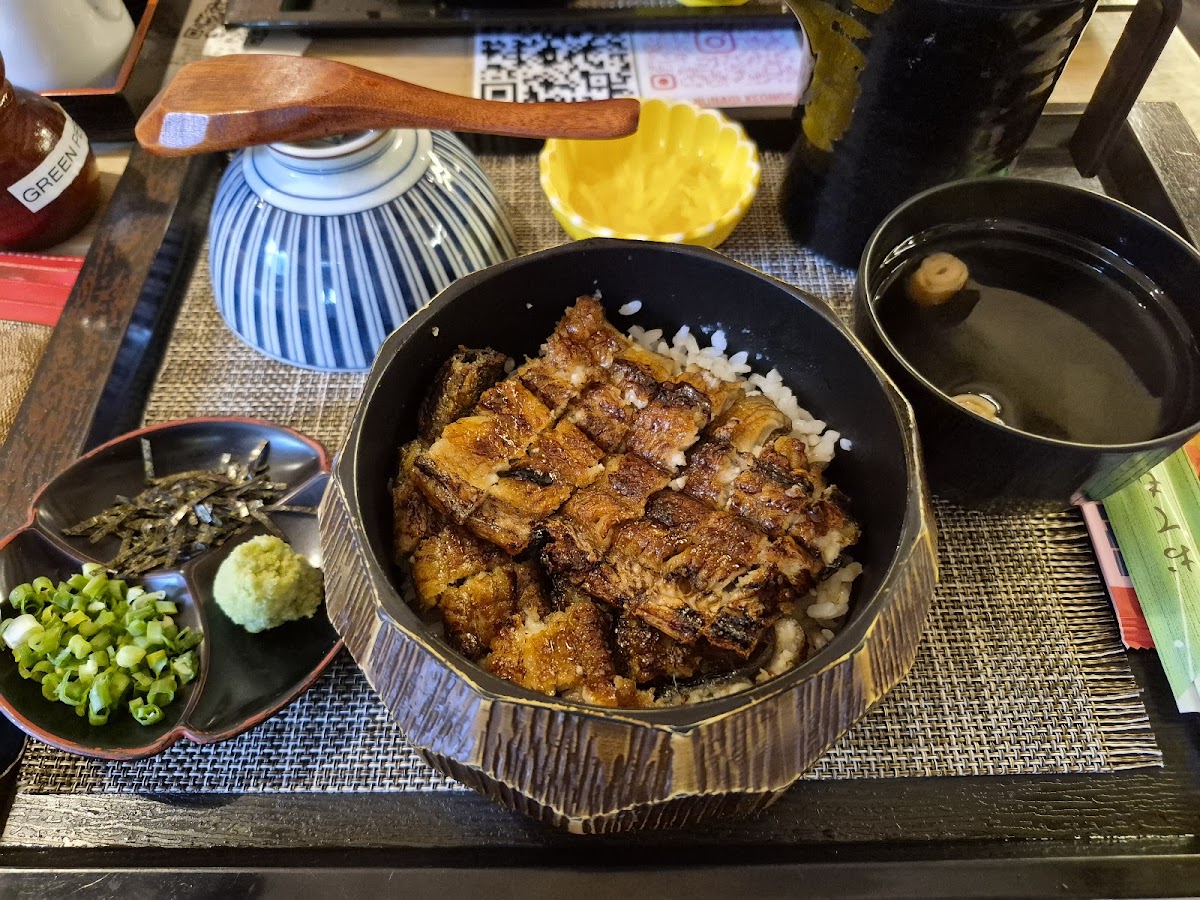
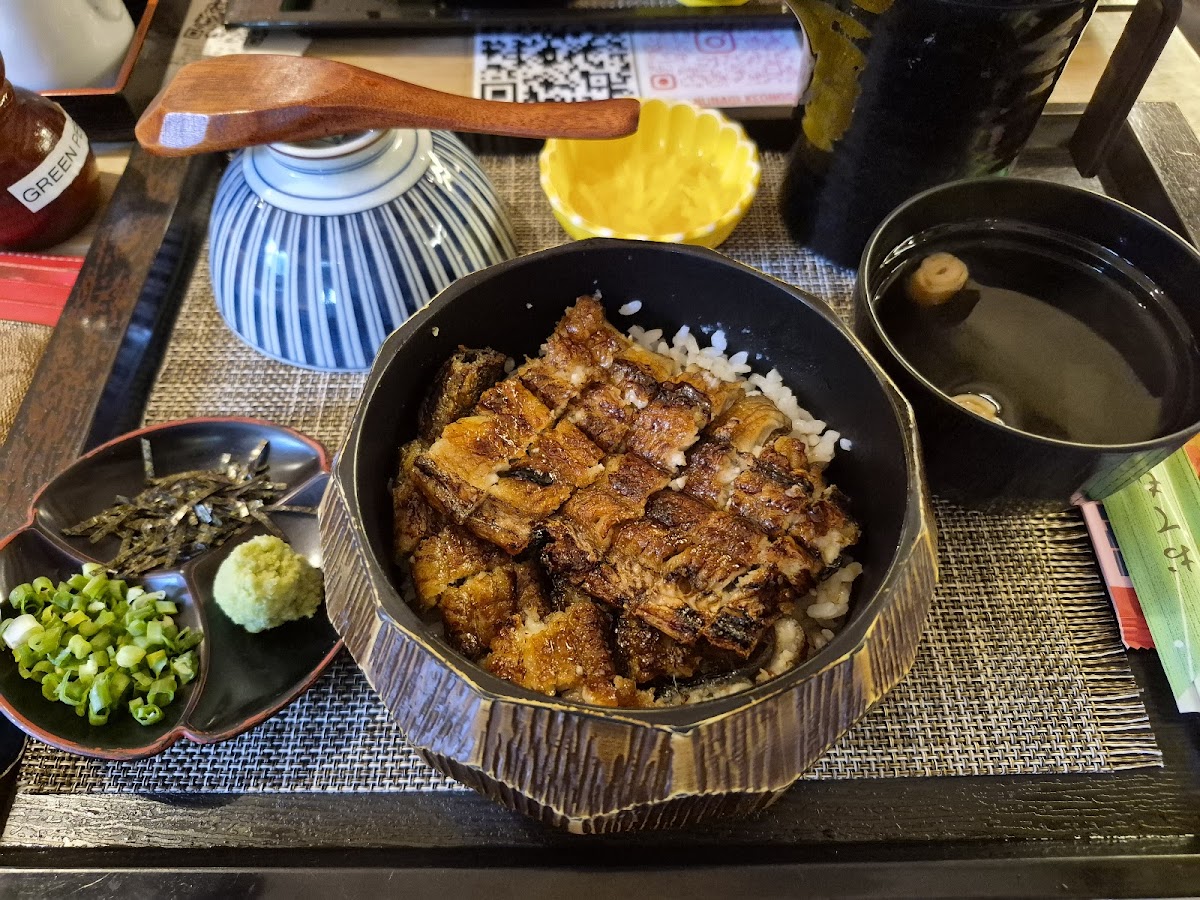
The signature dish is the Hitsumabushi (ひつまぶし), a Nagoya specialty that transforms a simple bowl of eel and rice into a three-course experience. The eel arrives in a traditional wooden tub (hitsu) over rice, and you eat it in three distinct ways: first, enjoy the eel straight with rice to appreciate the pure grilled flavour; second, add condiments (wasabi, spring onion, nori) to introduce new flavour dimensions; third, pour dashi broth over the remaining rice and eel to create a comforting ochazuke-style finish. Each portion reveals a different character of the eel. The Unatama Don (S$18.80) is the most affordable entry point — eel paired with thick slabs of pillowy tamagoyaki and rice. The Umaki (eel rolled in tamagoyaki, S$12.80) is an essential side dish.
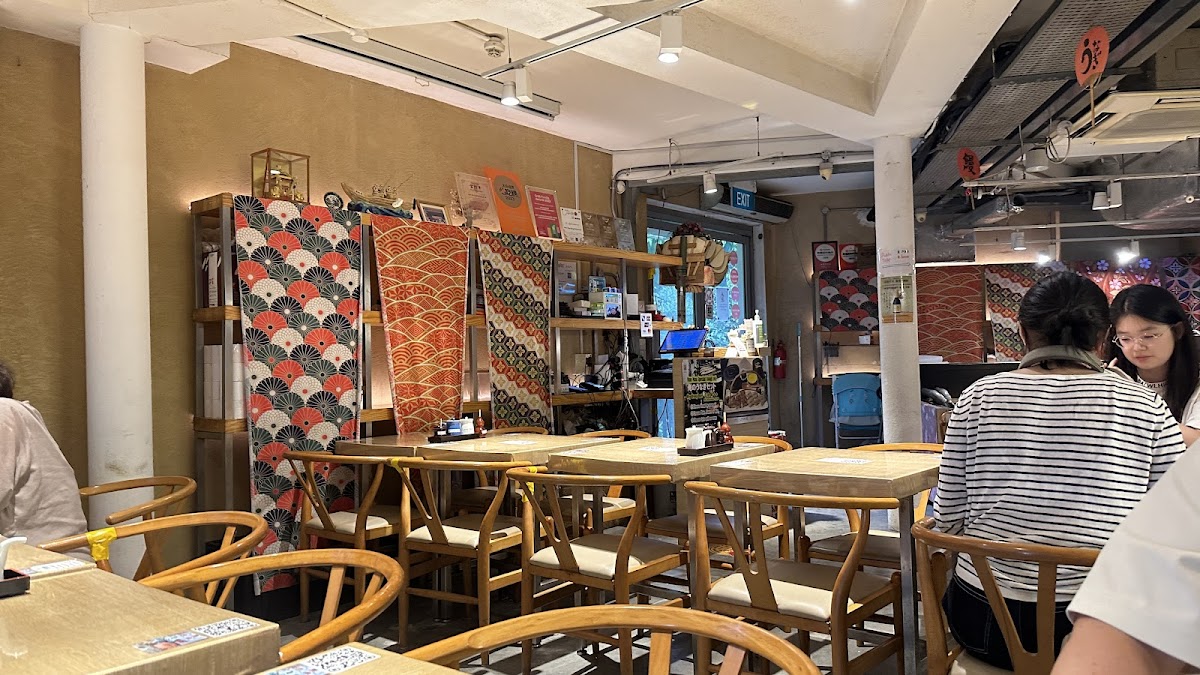
The restaurant is small and intimate — counter seats give the best experience, with a direct view of the grilling station behind glass. Table seating is also available but space is limited. Queues are common during peak lunch (12-2pm) and dinner hours. The Keong Saik Road location, set along the charming Duxton Plain Park linear garden, is perfect for a pre- or post-dinner stroll. For those who cannot wait, many regulars take away their unagi and picnic in the park — a quintessentially Keong Saik experience. Reservations are available via Chope and strongly recommended. The restaurant is closed on Sundays.
Compass Verdict
The original Man Man — the Keong Saik Road outlet that started the cult following. Hamamatsu-style grilled eel with the signature Hitsumabushi three-way eating experience. This is the flagship that made Man Man Singapore's most celebrated unagi restaurant. Queue expected, especially weekends.
Recommended For
Menu & Pricing
Prices ++ (subject to service charge and GST). Live eel grilled on-demand — please allow preparation time. Menu may vary based on seasonal availability.
Unagi Donburi (Eel Rice Bowls)
| Unatama Don — grilled eel + thick tamagoyaki slabs on rice (most affordable entry) | S$18.80++ |
| Unadon (Medium) — charcoal-grilled eel on rice, regular portion | S$25.80++ |
| Unadon (Large) — generous portion of grilled eel on rice | S$32.80++ |
Hitsumabushi (Nagoya-Style 3-Way Eel)
| Hitsumabushi — eel in wooden tub, eat 3 ways: plain, with condiments, as ochazuke | from S$28.80++ |
| Double Layer Hitsumabushi — extra eel, serves 2-3 to share | from S$58++ |
Side Dishes
| Umaki — unagi rolled inside layers of fluffy tamagoyaki | S$12.80++ |
| Chawanmushi — silky steamed egg custard with unagi | ~S$8++ |
| Unagi Bone Crackers — crispy fried eel bones (snack) | ~S$5++ |
Practical Information
Dietary Information
Photos
Sourced via Google Places — food-focused photography
Location
1 Keong Saik Road, #01-01, Singapore 089109
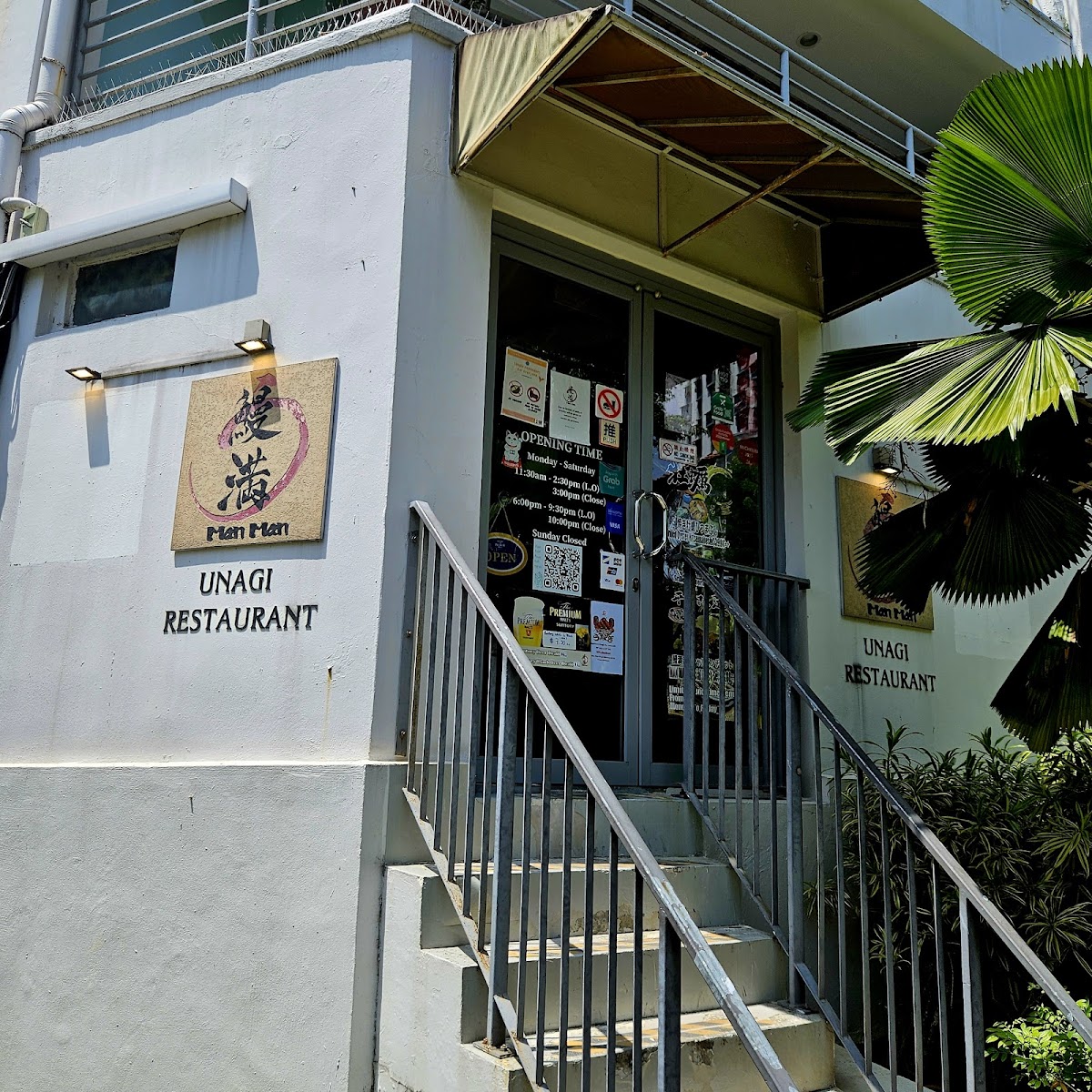
Ground floor shophouse on Keong Saik Road, set along the linear park (Duxton Plain Park). Look for the orange live eel tanks at the entrance. Compact space — counter and table seating. Queue expected during peak hours. Nearest MRT: Outram Park (NE3/EW16), 5-min walk.
📍 Open in Google MapsYour Dining Journey
From the live eel tanks to the charcoal grill to your bowl — what to expect at Man Man.
Meet the Eels
As you approach Man Man on Keong Saik Road, the first thing you notice are the large orange tanks at the entrance, filled with live eels bubbling away in aerated water. These juvenile freshwater eels (under one year old) have been imported from Japan's Mikawa Isshiki region — the gold standard for unagi sourcing. Watching them swim is both fascinating and a powerful statement of freshness: these are not frozen fillets shipped from a factory, but live creatures that will be prepared on-demand for your meal. If you are seated at the counter, you will have a front-row view of the cutting and grilling process through a glass partition.
Choose Your Eel
The menu centres on unagi served different ways. First-timers should go for the Hitsumabushi (from S$28.80++) — the Nagoya-style three-way eating experience is the most complete way to appreciate Man Man's eel. If sharing with a group, the Double Layer Hitsumabushi (from S$58++) is ideal for 2-3 people. On a budget, the Unatama Don (S$18.80++) pairs grilled eel with generous slabs of fluffy tamagoyaki — excellent value. Do not skip the Umaki (S$12.80++) as a starter — this Japanese omelette wrapped around a strip of eel is a beautiful combination of savoury egg and sweet eel. The Chawanmushi (steamed egg custard) is also worth ordering.
Three Ways to Eat Hitsumabushi
The Hitsumabushi arrives in a traditional wooden tub. Divide it into roughly four portions and eat three of them differently. First: scoop a portion of eel and rice straight into your bowl. Eat it plain — this is where you taste the pure charcoal-grilled flavour, the crispy skin, the tender flesh, the sweet tare glaze. Second: take another portion and add the condiments provided — freshly grated wasabi, chopped spring onion, shredded nori seaweed. Each condiment introduces a new dimension that transforms the same eel into a completely different experience. Third: pour the warm dashi broth over the final portion to create ochazuke — the broth softens the rice, mellows the eel, and creates a comforting soup that is the perfect finish. The fourth portion is yours to eat however you liked best.
The Keong Saik Experience
After your meal, step outside into one of Singapore's most atmospheric dining streets. Keong Saik Road has transformed from its historical roots into a vibrant strip of restaurants, bars, and cafes in beautifully restored shophouses. The linear Duxton Plain Park runs parallel to the restaurant — a narrow, tree-lined corridor that was once an old railway line. Many Man Man regulars grab their unagi to go and picnic in the park on warm evenings. The area is also home to some of Singapore's best cocktail bars (Neon Pigeon, The Old Man), making Man Man an ideal first stop for a Keong Saik evening out.
Man Man is that rare restaurant where the product genuinely justifies the price. Live eel, grilled on-demand over charcoal by a 20-year veteran, in a Keong Saik shophouse — there is nothing mass-produced or compromised about this experience. The Hitsumabushi is the must-order: eating the same eel three different ways reveals how versatile this ingredient truly is, and Man Man's execution — crispy skin, tender flesh, deeply flavoured tare — is genuinely world-class. The Unatama Don at S$18.80 is one of the best value unagi dishes in Singapore. For unagi lovers, this is pilgrimage territory. For everyone else, it is an education in what freshwater eel can be when sourced and prepared with absolute integrity. The only drawback is the compact size and inevitable queues — book on Chope, or come at 11:30am sharp to beat the lunch crowd.
Unagi: Japan's Most Treasured Fish
Unagi (鰻, freshwater eel) occupies a uniquely revered position in Japanese food culture. Unlike most fish, eel has been a luxury ingredient in Japan for centuries — references to eating eel date back to the Nara period (710-794). The tradition of eating unagi on the hottest day of summer (Doyo no Ushi no Hi) dates to the Edo period and continues today, when eel shops across Japan see their longest queues. The preparation method — kabayaki (蒲焼), where the eel is filleted, skewered, and repeatedly dipped in tare while grilling over charcoal — was perfected during the Edo period and has remained essentially unchanged for over 200 years. In recent decades, wild eel populations have declined dramatically, making farmed eel the standard. Man Man sources its eels from Mikawa Isshiki in Aichi Prefecture, one of Japan's most prestigious eel farming regions, where the climate and water quality produce eels of exceptional tenderness and flavour.
Hitsumabushi (ひつまぶし) is a specialty of Nagoya, Japan's fourth-largest city, located in Aichi Prefecture — the same region from which Man Man sources its eels. The dish was invented as a way to maximise the enjoyment of expensive unagi by offering three distinct eating experiences in one serving. The name comes from 'hitsu' (the wooden tub in which it is served) and 'mabushi' (to mix). While unadon (eel on rice) is available throughout Japan, hitsumabushi is specifically a Nagoya tradition — eating it at Man Man, with eels sourced from the same Aichi region, is as close to the authentic Nagoya experience as you can get in Singapore.