Tendon Ginza Itsuki
At a Glance
About Tendon Ginza Itsuki
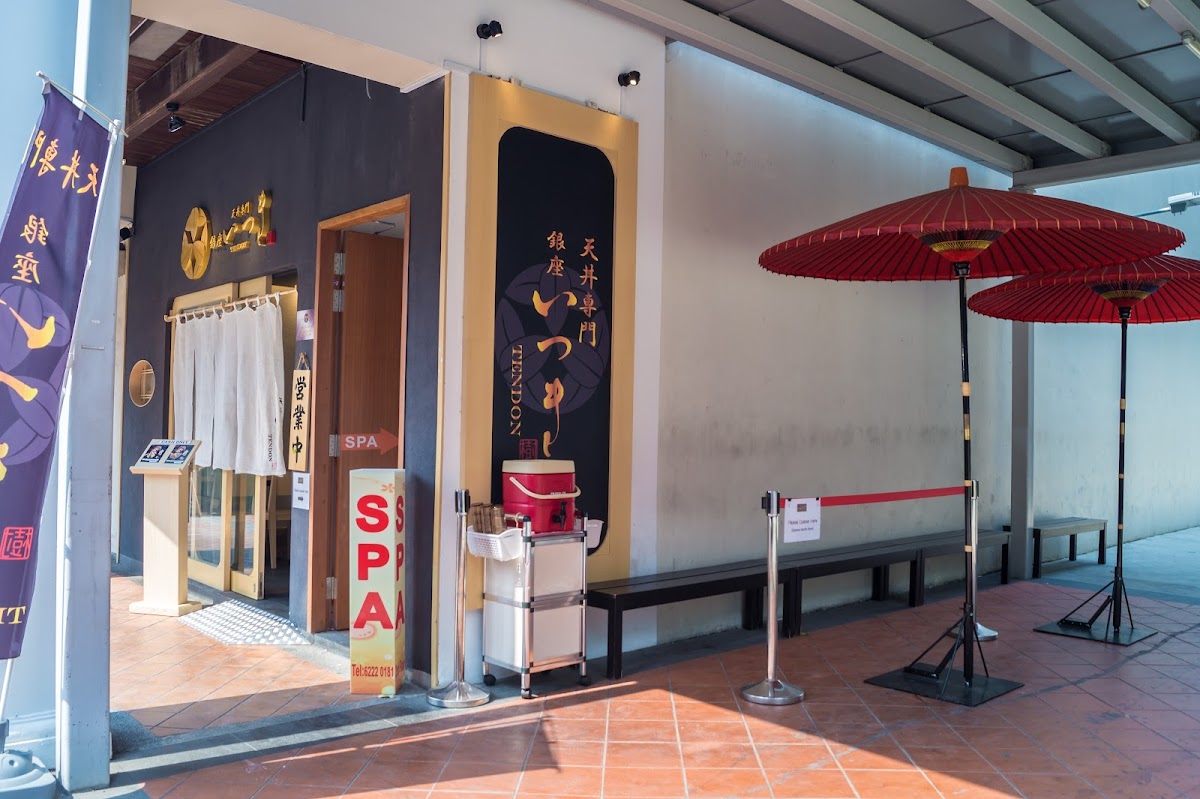
Tendon Ginza Itsuki is the restaurant that started Singapore's tempura rice bowl trend. When it opened on Tanjong Pagar Road as the eighth concept from Chef Keisuke Takeda's growing restaurant empire, it was the first dedicated tendon (tempura donburi) restaurant in the country — a format that has since been widely copied but never quite matched at this price-to-quality ratio. The restaurant is a collaboration between the Keisuke Group and Ginza Itsuki Sushi, a highly acclaimed sushi restaurant in Tokyo's prestigious Ginza district. The tendon sauce — the sweet, savoury glaze that is poured over the tempura and rice — was developed in collaboration with Naoki Takaku, Chef Keisuke's childhood friend and the sushi master behind Ginza Itsuki. This personal connection between the two chefs gives the sauce an authenticity that mass-produced alternatives lack. The 24-seat restaurant at 101 Tanjong Pagar Road is compact, counter-heavy, and deliberately focused: there are only two items on the menu.
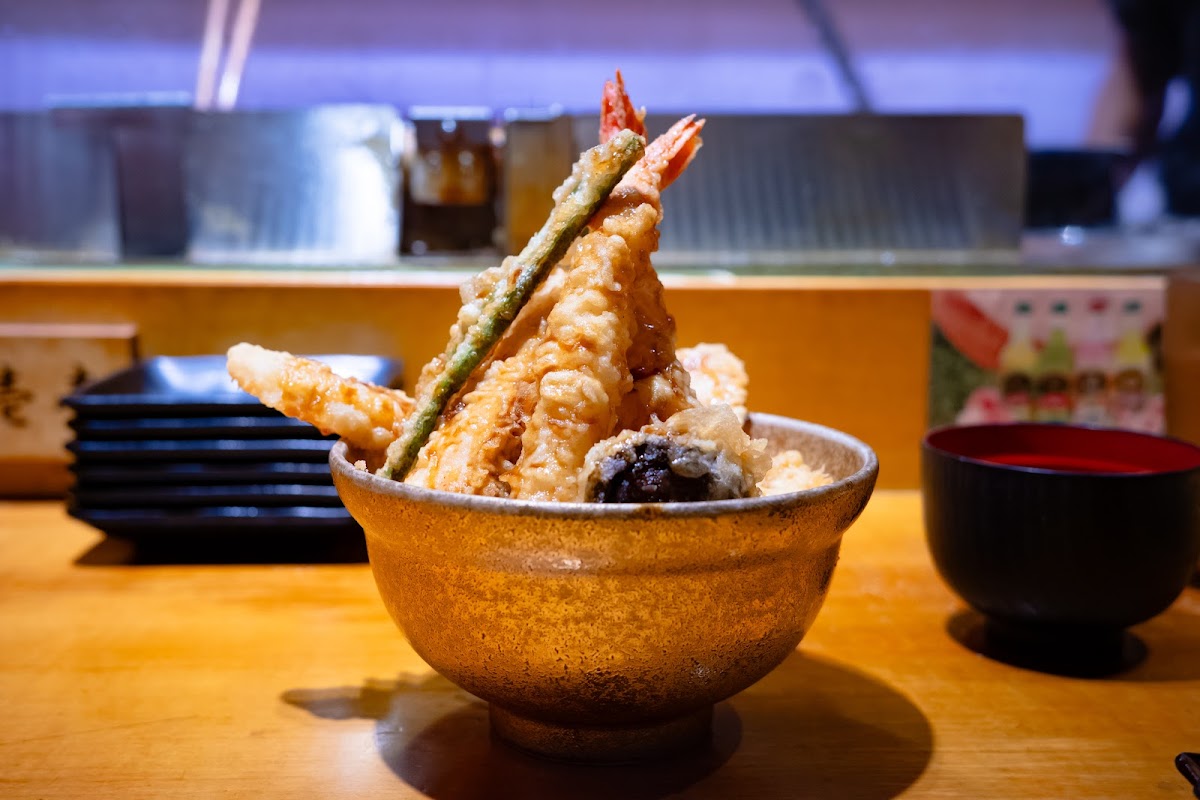
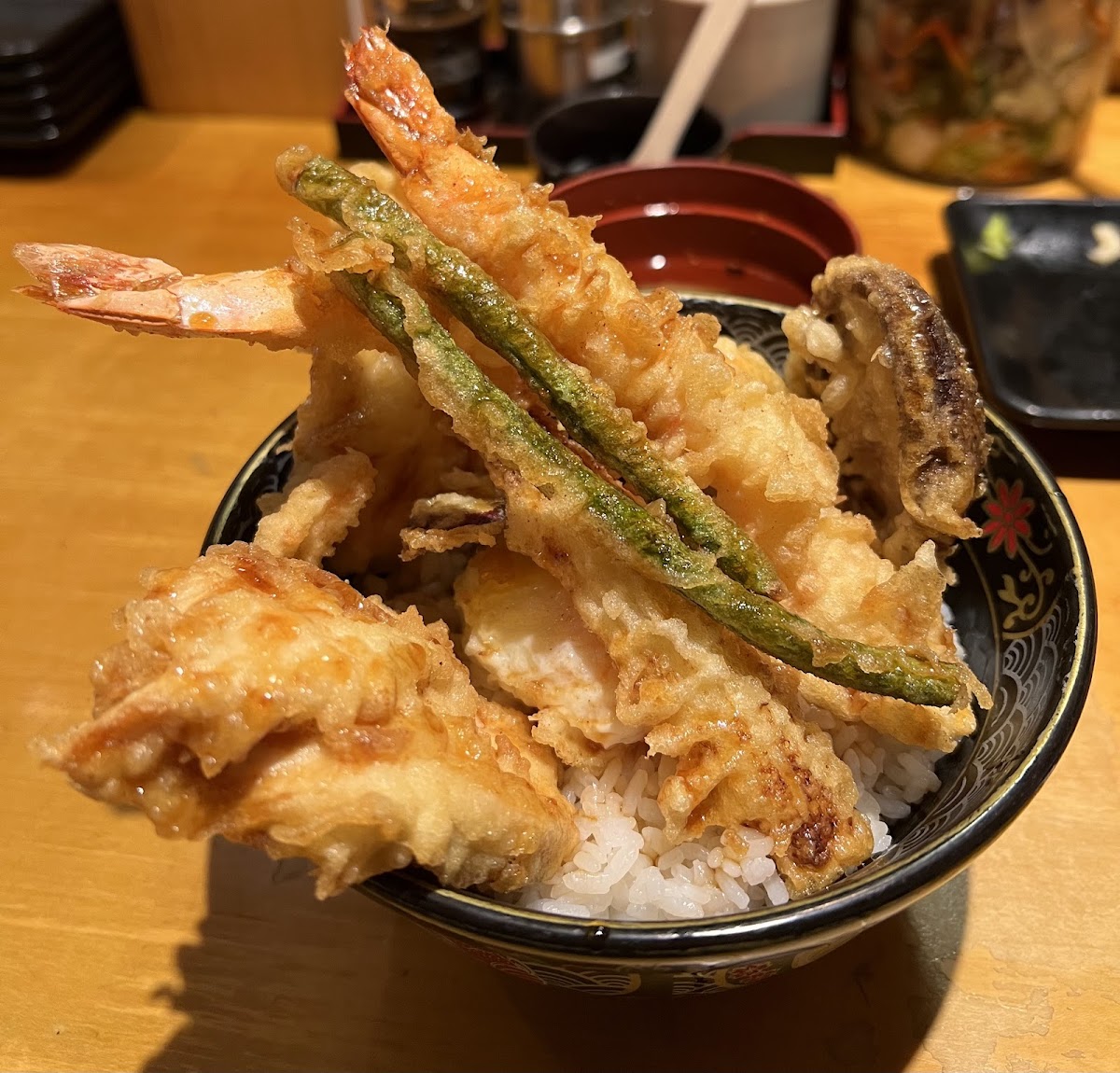
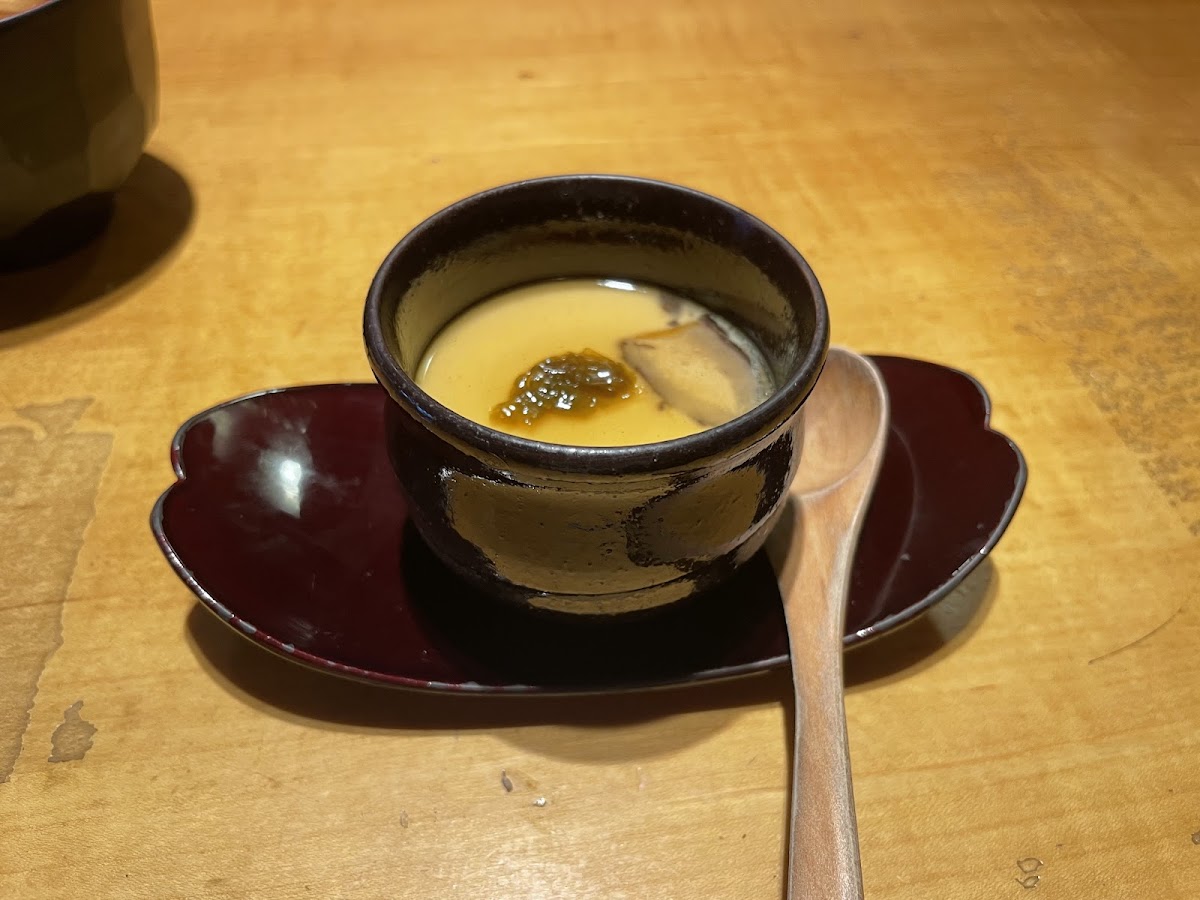
The menu is perhaps the simplest in all of Tanjong Pagar: two items. The Special Tendon at S$13.90 features 2 pieces of prawn tempura, 2 pieces of chicken breast tempura, a half-boiled egg, and approximately 4 pieces of vegetable tempura (sweet potato, shiitake mushroom, lotus root, eggplant) — all piled high above the rim of an Arita porcelain bowl filled with Japanese rice, drenched in the Ginza Itsuki-collaboration tendon sauce. The Vegetable Tendon at S$12.90 omits the protein and delivers a generous heap of capsicum, lotus root, shiitake, sweet potato, and other root vegetables in the same crispy tempura coating. Both bowls are enormous — the portion size was one of the first things that made Tendon Ginza Itsuki famous, as tempura pieces tower above the bowl's rim and the rice beneath is generously portioned. Both come with chawanmushi (steamed egg custard — silky, soft, perfectly seasoned) and a bowl of miso soup, plus complimentary pickled vegetables at every table.
The Arita porcelain bowls are a detail that most diners do not consciously notice but that significantly affects the eating experience. Arita-yaki is a 400-year-old porcelain tradition from Saga Prefecture on the island of Kyushu — the same region that gave Japan its first porcelain production. The bowls used at Tendon Ginza Itsuki are custom-made by Arita craftsmen specifically for the restaurant, designed to retain heat so that the rice stays warm and the tempura remains crisp throughout the meal rather than becoming soggy from steam. This is a level of detail that a S$13.90 restaurant has no obligation to provide — and the fact that it does speaks to Chef Keisuke's philosophy that every element of the dining experience, no matter how small, should be optimised. The counter seating allows diners to watch the chefs frying tempura in real time — the rhythmic dipping, the precise oil temperature, and the careful timing that determines whether tempura is crisp or greasy. When the queue outside is long (which it often is at lunch), the complimentary iced barley tea dispenser provides refreshment while you wait.
Recommended For
Menu & Pricing
Only 2 items. Both include chawanmushi + miso soup + free pickled vegetables. Walk-in only.
| Item | Description | Price |
|---|---|---|
| Special Tendon | Prawns (2) + chicken breast (2) + half-boiled egg + vegetables (4) + tendon sauce over rice in Arita porcelain | S$13.90 |
| Vegetable Tendon | Capsicum + lotus root + shiitake + sweet potato + other vegetables — generous vegetarian-friendly option | S$12.90 |
The Tendon Ginza Itsuki Experience
The Restaurant That Started a Trend
Before Tendon Ginza Itsuki opened on Tanjong Pagar Road, dedicated tempura rice bowl restaurants did not exist in Singapore. Tempura was available everywhere — as a side dish at sushi restaurants, as part of a teishoku set, or at high-end tempura counters charging S$100+ for an omakase — but nobody had created a standalone restaurant focused exclusively on tendon: the Japanese comfort-food tradition of heaping crispy tempura onto a deep bowl of rice and dousing it with sweet tendon sauce. Chef Keisuke, recognising that this was a format perfectly suited to his fast-casual philosophy, partnered with his childhood friend Naoki Takaku of Ginza Itsuki Sushi to create a restaurant that would do for tendon what his other outlets had done for ramen, hamburg steak, and gyoza — make it accessible, affordable, and irresistibly satisfying. The format was an immediate hit: queues formed from the first week, food bloggers crowned it a must-visit, and within months, competing tendon restaurants began appearing across Singapore. Tendon Ginza Itsuki was not just a restaurant — it was a category creator.
S$13.90 for a Mountain of Tempura
The Special Tendon at S$13.90 is an exercise in generosity. When the bowl arrives, the first thing you notice is that the tempura pieces extend well above the rim — prawns, chicken, egg, and vegetables piled in a golden mountain that looks like it belongs at a restaurant charging twice the price. The deep Arita porcelain bowl beneath conceals a generous base of Japanese rice that, combined with the tempura and the sweet tendon sauce, creates a meal that is more than enough for a satisfying lunch. The chawanmushi (steamed egg custard) that comes with every set is not an afterthought — it is silky, soft, and perfectly seasoned, the kind of chawanmushi that some restaurants charge S$6-8 for as a standalone dish. The miso soup is flavoursome and warming. The free pickled vegetables provide acidic contrast. For S$13.90 — before service charge and GST, so approximately S$16-17 all-in — you receive a complete Japanese meal with a protein-heavy main, two sides, and unlimited pickles. This is the value equation that built the queues and launched a hundred imitators.
Arita Porcelain — 400 Years of Craft in a S$14 Bowl
The Arita porcelain bowls at Tendon Ginza Itsuki are the detail that food industry professionals notice and casual diners feel without knowing why. Arita-yaki has been produced in Saga Prefecture since the early 1600s, making it one of the oldest and most prestigious porcelain traditions in Japan. The bowls used at the restaurant are custom-made for the specific purpose of serving tendon: they are deeper than standard rice bowls to accommodate the towering tempura, and their walls are thicker than typical porcelain to retain heat, keeping the rice warm and the tempura crisp for longer. Using Arita porcelain at a S$13.90 restaurant is an objectively extravagant choice — standard ceramic bowls would cost a fraction of the price and most diners would not notice the difference. But this is the Keisuke philosophy in action: obsess over the details, even the ones that customers do not consciously register, because those details accumulate into an experience that feels inexplicably better than it should at this price point.
The Counter View — Watching Tempura Art
Most of the 24 seats at Tendon Ginza Itsuki are at the counter, which wraps around the open kitchen and gives you a front-row view of the tempura frying process. The chefs work with practiced efficiency: ingredients are dipped in batter, lowered into oil that has been heated to the precise temperature for each item (vegetables need lower heat and longer time; prawns need higher heat for a shorter burst), and removed at the exact moment when the batter achieves the golden crispness that defines good tempura without absorbing excess oil. The sound of tempura frying — the vigorous sizzle as batter meets hot oil, the quieter bubbling as moisture escapes and the coating sets — is the ambient soundtrack of the restaurant and one of the sensory pleasures of eating here. The counter format also means service is fast: the chef can slide your completed bowl directly across the counter, which explains how Tendon Ginza Itsuki manages the lunch queue with a 24-seat restaurant that serves hundreds of bowls daily.
Two Items, Zero Decisions, Maximum Satisfaction
Like Hamburg Steak Keisuke's two-item menu, Tendon Ginza Itsuki's radical simplicity is a deliberate strategy that works in the restaurant's favour. You choose between Special Tendon (S$13.90) and Vegetable Tendon (S$12.90). That is the only decision. This simplicity means the kitchen produces only two dishes, which allows them to optimise every aspect of the frying process for those specific items. The oil temperature is calibrated for this exact menu. The batter consistency is adjusted for these specific ingredients. The sauce is formulated to complement these particular combinations. The result is a restaurant that does two things extremely well rather than twenty things adequately — and at S$12.90-13.90, the pricing reflects the efficiency savings of a focused menu. For the CBD worker at 12:15pm who has already spent mental energy on morning meetings and needs lunch decided instantly, this zero-decision menu is not a limitation — it is a gift.
Practical Information
Dietary Information
Tanjong Pagar — Singapore's Japanese Food Capital
The Neighbourhood
Tanjong Pagar holds the highest concentration of Japanese restaurants in Singapore, with over 45 establishments. From Michelin-starred omakase to late-night ramen, this is the most complete Japanese dining neighbourhood in Southeast Asia.
Insider Tips — Dining at Tendon Ginza Itsuki
Order Special Tendon S$13.90 — it includes everything. Come before noon to avoid the worst of the lunch queue. Free barley tea while queuing. The chawanmushi is surprisingly good for a S$14 restaurant. Vegetable Tendon is a genuine vegetarian option (confirm no dashi/fish). Counter seats give the best view of tempura frying. Same Keisuke group as Hamburg Steak Keisuke and Tori King.
Planning Your Visit to Tanjong Pagar
Tanjong Pagar MRT (East-West Line) is the main access point. Parking at Guoco Tower, International Plaza, 100AM, Icon Village. The area is compact and walkable — most Japanese restaurants within 10 minutes of the MRT.
Editor's Note
Tendon Ginza Itsuki is the restaurant that proved Singapore was ready for dedicated tendon dining — and at S$13.90 for a towering bowl of crispy tempura over rice with chawanmushi and miso soup, it remains the value benchmark that every subsequent tendon restaurant is measured against. The Arita porcelain bowls are an unnecessary luxury at this price point, and that is precisely what makes them wonderful — they represent a commitment to quality in details that most restaurants at this level would never consider. The two-item menu keeps the kitchen focused, the portions are generous to the point of absurd, and the collaboration with Ginza Itsuki Sushi gives the tendon sauce an authenticity that off-the-shelf alternatives cannot match. If you work in the Tanjong Pagar CBD and have not eaten at Tendon Ginza Itsuki, you are missing one of the most satisfying and affordable Japanese lunches in your neighbourhood. Come before noon, grab a barley tea, watch the queue move, and prepare to eat more tempura than you thought possible for S$14.