Kyoto Ramen Hachicken
At a Glance
About Kyoto Ramen Hachicken
Kyoto Ramen Hachicken (京都ラーメン八鶏) represents something unusual in Singapore's crowded ramen scene: a brand with genuine Kyoto heritage, offering ramen at prices that start below S$5. The restaurant is the sister brand of Hachiki-an (八鶏庵), a revered fine-dining establishment in Kyoto that has specialised in chicken cuisine since 1970 — over 55 years of history. Hachicken Ramen was first launched as a more casual, accessible concept in Bangkok, Thailand in 2022, before opening its first Singapore outlet at Chinatown Point #01-51 in December 2024.
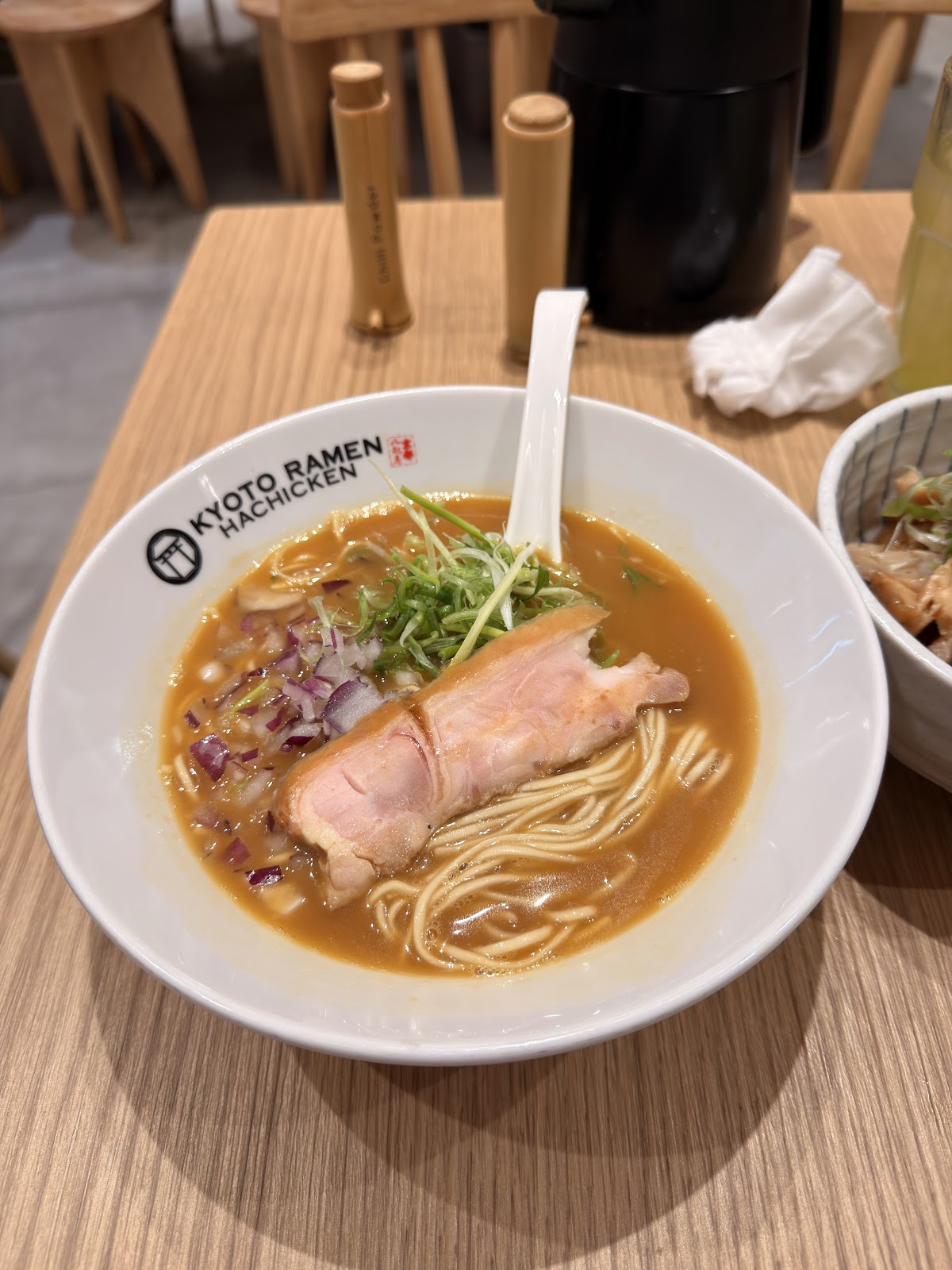
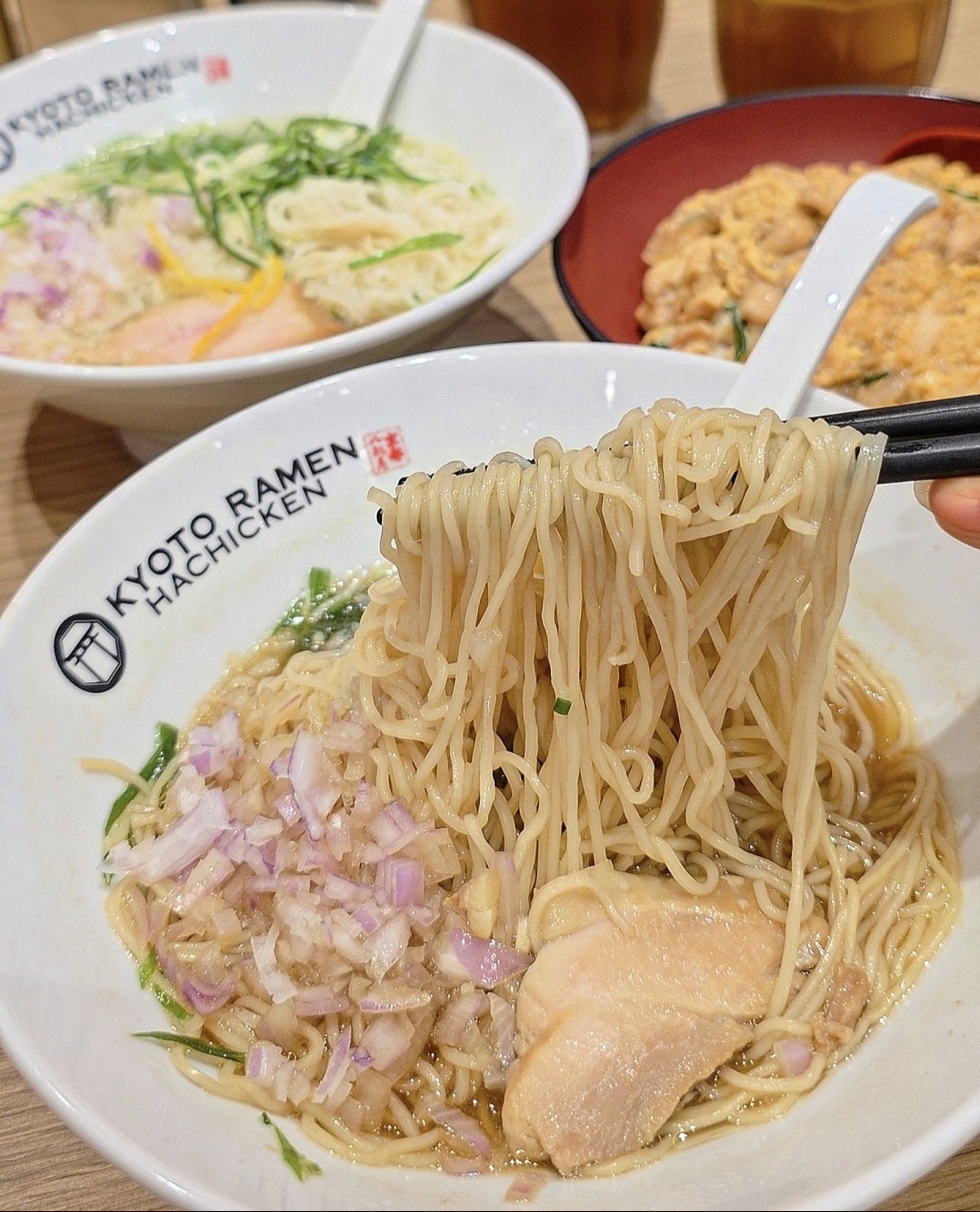
What sets Hachicken apart from Singapore's many tonkotsu-based ramen shops is its broth. Rather than the heavy, pork-bone-based tonkotsu that dominates the local ramen scene, Hachicken uses a blend of four types of dashi: chicken dashi, duck dashi, dried bonito (katsuobushi), and kelp (kombu). This is brewed fresh in-store every day. The result is a broth that is lighter and more nuanced than tonkotsu — deeply flavoured but without the heaviness, with a clean finish that lets you taste each component. Three ramen variations are built on this base: Shoyu (soy sauce, the most traditional), Shio (salt, the most delicate), and Miso (the richest). Critically, the broth contains no pork and no lard — the restaurant is applying for halal certification.
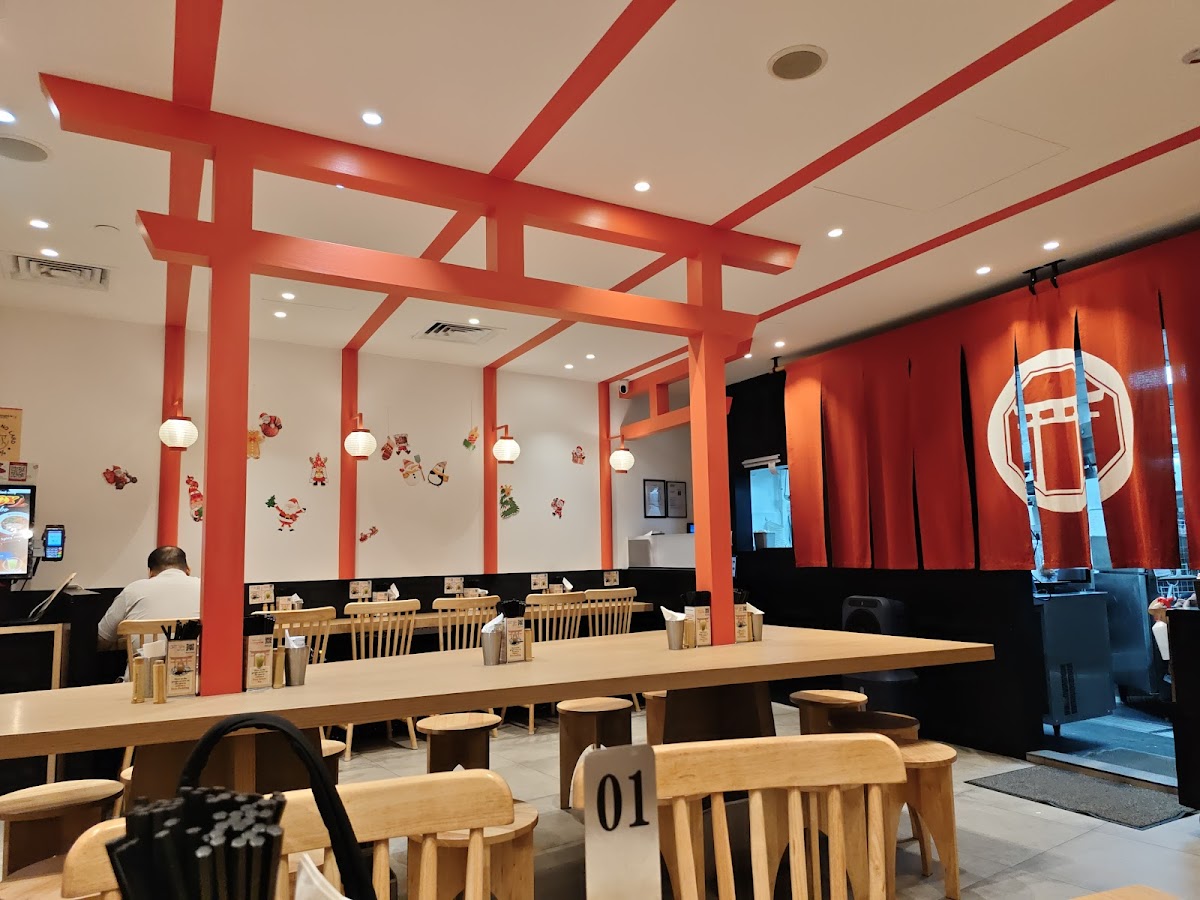
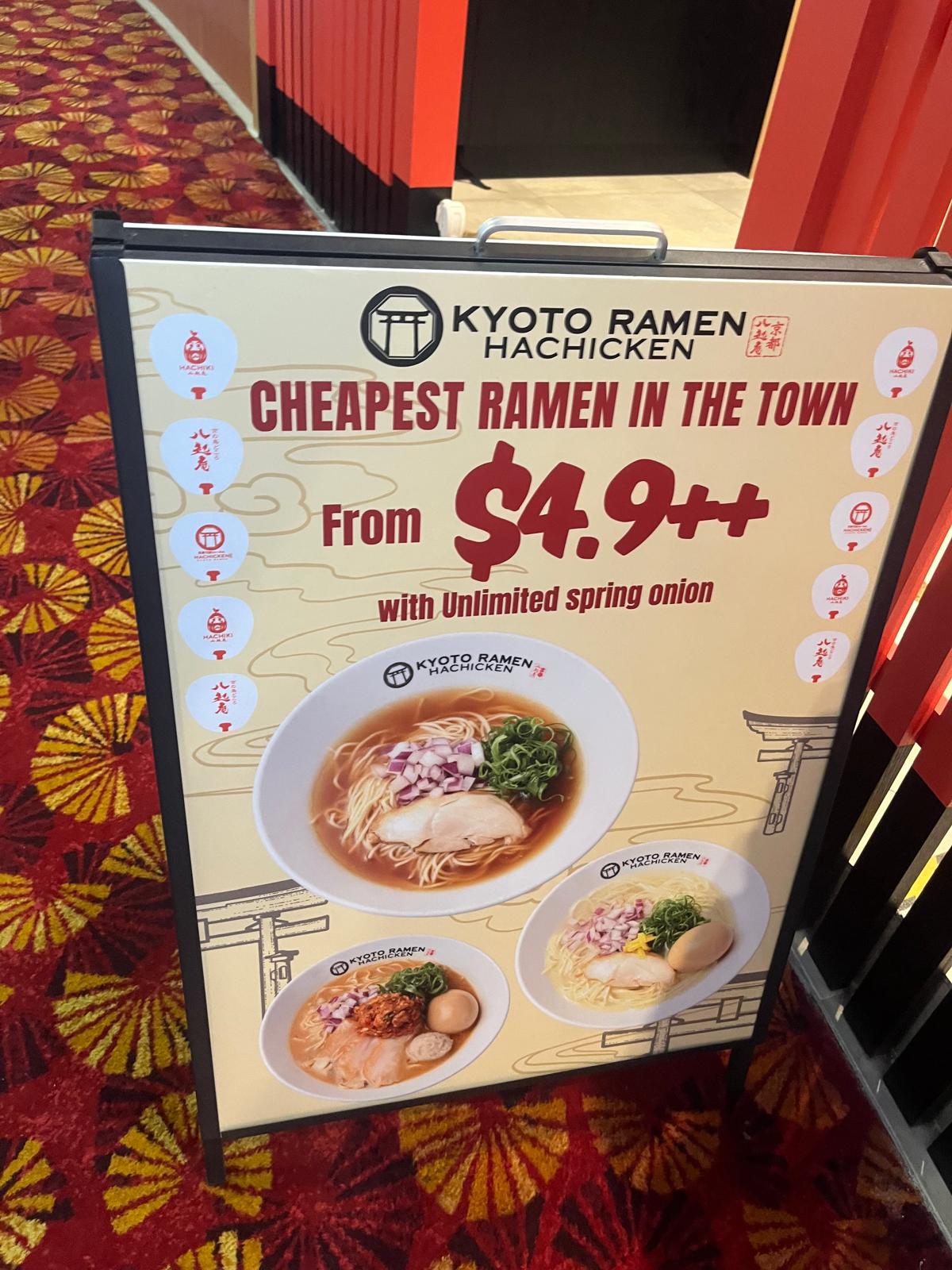
The interior of the Chinatown Point outlet deserves mention: it is designed to evoke Kyoto's iconic Fushimi Inari Shrine, with miniature torii gate fixtures creating a distinctly Japanese atmosphere in the cozy 30-seat space. Ordering is done through a self-service kiosk — common in Japanese ramen restaurants in Japan but still relatively uncommon in Singapore. The base Shio or Shoyu ramen at S$4.90++ comes with simple toppings and is designed as an entry-level option to experience the broth. For a more complete bowl, the Chicken Shoyu Ramen (S$12.80++) includes tender chicken chashu, tamago, and spring onions. The Oyako Don (S$11.80++) — chicken and scrambled egg on rice with miso soup — is a comforting non-ramen option. The Spicy Chicken Karaage (S$6.80++) is the standout side dish, featuring crispy fried chicken with a citrus-spiced coating.
Compass Verdict
A chicken-based ramen concept — tori paitan (chicken white broth) that is creamy, rich, and pork-free. A welcome alternative for those who avoid pork but want real ramen. The Chinatown Complex location keeps prices at hawker level.
Recommended For
Menu & Pricing
Prices ++ (service charge & GST). Self-ordering kiosk. Walk-in only. No pork no lard.
Ramen (Chicken & Duck Dashi Broth)
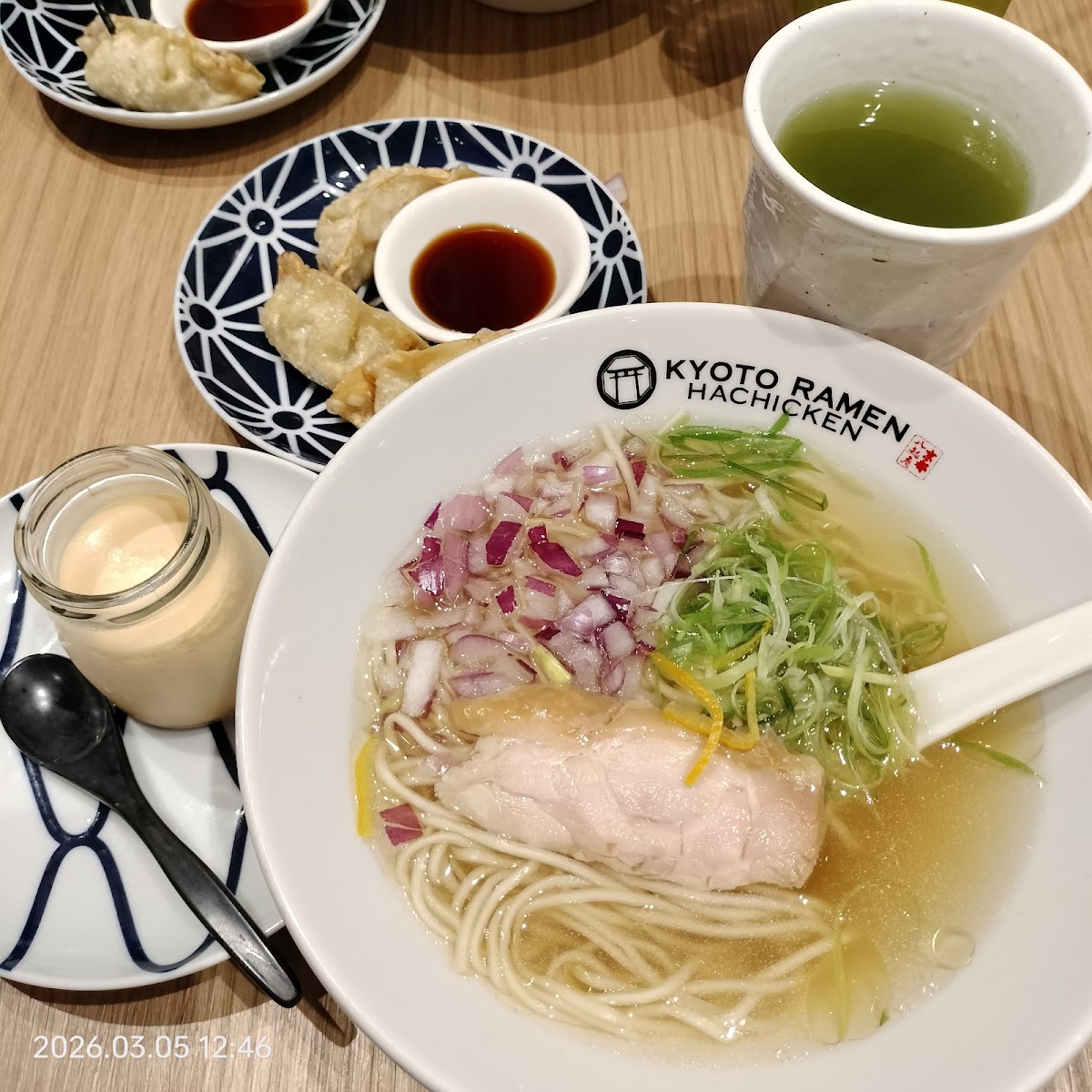
| Shio Ramen — light salt-based chicken-duck dashi broth | from S$4.90++ |
| Shoyu Ramen — soy sauce-based chicken-duck dashi broth | from S$4.90++ |
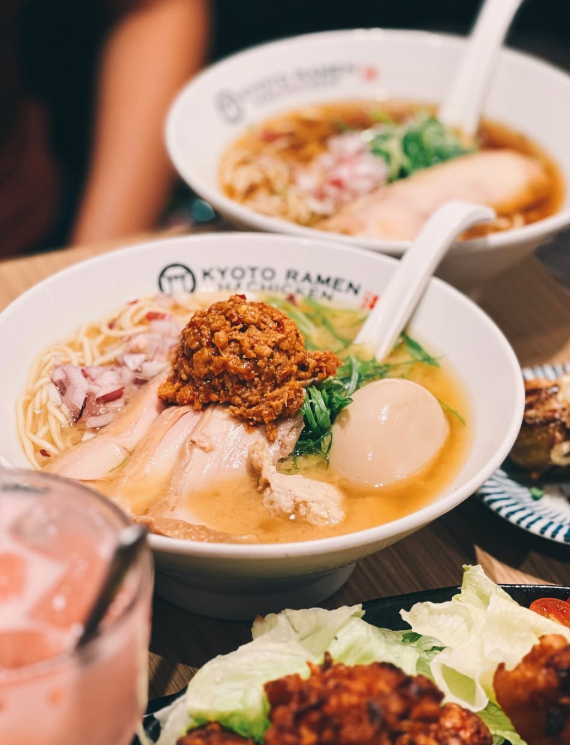
| Miso Ramen — rich miso with tamago, chicken, meatball, onions | S$10.90++ |
| Chicken Shoyu Ramen — full toppings: chicken chashu, tamago, spring onion | S$12.80++ |
Don & Sides
| Oyako Don — chicken + scrambled egg on rice + miso soup | S$11.80++ |
| Spicy Chicken Karaage — crispy fried chicken, citrus-spice coating | S$6.80++ |
| Pudding — creamy pudding with caramel sauce and berries | S$4.80++ |
Practical Information
Dietary Information
Photos
Sourced via Google Places — food-focused photography
Location
133 New Bridge Road, #01-51, Chinatown Point, Singapore 059413
Level 1 of Chinatown Point, beside Luckin Coffee, at the start of the spiral walkway leading up to the library. Cozy 30-seater with Fushimi Inari-inspired torii gate fixtures. Walk-in only, self-ordering kiosk. Direct from Chinatown MRT Exit E.
📍 Open in Google MapsYour Dining Journey
From the torii gates to the dashi bowl — what to expect at Kyoto Ramen Hachicken.
Step Through the Torii
Kyoto Ramen Hachicken is at #01-51 on Level 1 of Chinatown Point — beside Luckin Coffee, at the start of the spiral walkway leading up to the library. The cozy 30-seat interior is designed to evoke Kyoto's iconic Fushimi Inari Shrine, with miniature torii gate fixtures that create a distinctly Japanese atmosphere. Order at the self-service kiosk (common in Japan but still novel in Singapore), find a seat, and wait for your number to be called. The space feels more like a small ramen-ya in Kyoto than a mall restaurant.
Taste the Four-Dashi Broth
The first sip of Hachicken's broth reveals its difference from standard ramen: this is not tonkotsu. The blend of chicken dashi, duck dashi, dried bonito, and kelp creates a broth that is lighter, cleaner, and more nuanced. The Shoyu version has a subtle soy depth that enhances without dominating. The Shio version is the most delicate — almost transparent but surprisingly flavourful. The Miso version (S$10.90++) is the richest, with added tamago, chicken meatball, and chopped onions. For first-timers, the Chicken Shoyu Ramen (S$12.80++) is the best introduction — it comes with all the toppings and gives you the complete Hachicken experience.
Beyond Ramen
If you are not in the mood for noodles, the Oyako Don (S$11.80++) is a satisfying alternative — tender chicken pieces and fluffy scrambled egg on warm Japanese rice, served with miso soup. The Spicy Chicken Karaage (S$6.80++) is the must-order side — crispy, juicy fried chicken with a citrus-spiced coating that adds a bright, zingy dimension. For dessert, the Pudding (S$4.80++) is simple but well-executed — creamy custard with caramel sauce and fresh berries. The no-pork-no-lard policy makes Hachicken accessible to a wider range of diners, and the halal certification application (if approved) will make it one of the very few halal-certified Japanese ramen restaurants in central Singapore.
Kyoto Ramen Hachicken occupies a genuinely unique position in Chinatown Point's Japanese dining lineup. While Kiwami on Level 2 offers serious tonkotsu, Hachicken provides the opposite: a light, refined, chicken-and-duck-dashi-based ramen that is closer to the elegant Kyoto ramen tradition than the heavy Hakata style that dominates Singapore. The S$4.90++ entry-level ramen is a bold pricing move that gets diners in the door, while the S$12.80++ Chicken Shoyu Ramen delivers the full experience. The no-pork-no-lard policy (with halal certification pending) opens this up to Muslim diners — a significant gap in Singapore's ramen market. The Fushimi Inari-inspired interior adds charm. Still new (December 2024) and with some teething issues noted by food critics, but the 55-year Kyoto pedigree gives confidence that quality will stabilise.