Highlights
About
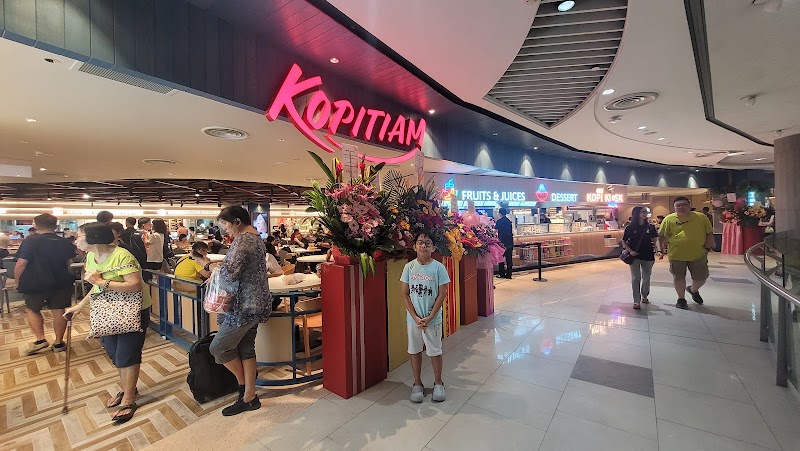
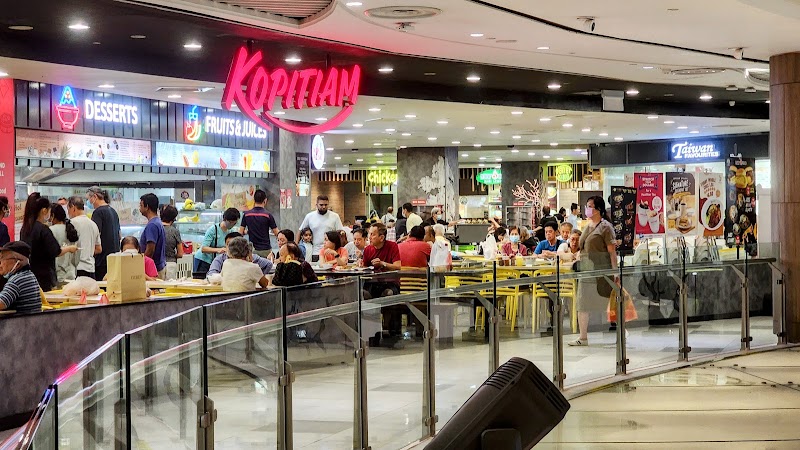
CoCo Ichibanya (CoCo壱番屋, commonly called "CoCo Ichi") is the undisputed king of Japanese curry — the world's largest curry restaurant chain, certified by Guinness World Records with over 1,400 outlets globally. Founded in 1978 in Ichinomiya, Aichi Prefecture by Yoko and Muneo Munemitsu (a husband-wife team), CoCo Ichibanya built its empire on one principle: let customers customise their curry exactly how they want it — spice level (from mild to volcanic Level 10), rice portion (from 150g to a massive 700g), and a dizzying array of toppings (pork cutlet, chicken katsu, shrimp, vegetables, cheese, egg). At Compass One, CoCo Ichibanya operates in a "Kitchen" format within the Kopitiam food court on Level 4 (#04-11) — a scaled-down version of their full restaurant concept.
The Kitchen format at Compass One is important to understand: this is not a full CoCo Ichibanya restaurant with complete customisation options. It is a food court stall that offers a fixed menu of CoCo Ichibanya's most popular dishes — Pork Cutlet Curry Rice, Chicken Katsu Curry Rice, Pork Cutlet Omelette Curry Rice, Scrambled Egg Curry Rice, and a few other standards. You cannot customise the spice level, rice portion, or freely mix-and-match toppings as you would at a full CoCo Ichibanya dine-in outlet. However, the curry roux itself is the same proprietary recipe used across all 1,400+ outlets globally — rich, slightly sweet, with a depth of flavour that builds from a blend of over 30 spices. The pork cutlet is breaded and deep-fried to a golden crisp. The rice is Japanese short-grain. At approximately S$10.70–14.90 per dish, it sits in the affordable range for a hearty Japanese curry meal.
For Sengkang residents, the CoCo Ichibanya Kitchen fills a category gap: Japanese curry. While Compass One has ramen (Ajisen), sushi (Genki Sushi, Ichiban Sushi), yakiniku (Yakiniku Like), gyudon (Yoshinoya), burgers (MOS Burger), and hotpot (Shabu Sai), CoCo Ichibanya is the only dedicated Japanese curry outlet. Japanese curry (カレーライス, karē raisu) is fundamentally different from Indian or Thai curry — it is thicker, sweeter, milder, and served as a sauce over rice rather than with bread or noodles. It is one of Japan's most popular home-cooked dishes (often called Japan's national dish alongside ramen and sushi), and CoCo Ichibanya has commercialised it into a global phenomenon. The Kopitiam food court setting means you can enjoy CoCo Ichibanya curry at food court prices, in an air-conditioned environment, without the queue times that full CoCo Ichibanya outlets sometimes experience.
Recommended For
Menu & Pricing
| Item | Price | Notes |
|---|---|---|
| Pork Cutlet Curry Rice Crispy breaded pork cutlet with CoCo Ichibanya curry sauce over rice | ~S$12.90 | Bestseller |
| Chicken Katsu Curry Rice Crispy chicken cutlet with curry sauce and rice | ~S$12.90 | Popular |
| Pork Cutlet Omelette Curry Rice Pork cutlet wrapped in omelette with curry sauce | ~S$14.90 | Premium |
| Scrambled Egg Curry Rice Fluffy scrambled egg with curry sauce on rice — budget option | ~S$10.70 | Budget |
| Vegetable Curry Rice Mixed vegetables with curry sauce on rice | ~S$10.70 | Vegetarian |
* Prices subject to Kopitiam card 10% discount available. Menu may vary.
Practical Info
Dietary Info
Your Visit
What to Order at the Kitchen Format
The Kitchen format has a fixed menu — no customisation of spice level or rice portion like full CoCo Ichibanya restaurants. First-timers: order the Pork Cutlet Curry Rice (~S$12.90) — this is the bestselling item at CoCo Ichibanya worldwide and the best representation of what the brand does. The curry is normal spiciness (medium-mild), the pork cutlet is thick and crispy, and the rice is generously portioned. Budget option: Scrambled Egg Curry (~S$10.70) — still uses the same excellent curry sauce, just with a simpler protein. Premium: Pork Cutlet Omelette Curry (~S$14.90) — the omelette wrapping adds egg richness to the combination. Use the Kopitiam card for 10% off.
Understanding Japanese Curry
Japanese curry (カレーライス) is one of Japan's three national dishes alongside ramen and sushi. It arrived in Japan via the British Navy in the late 1800s (British officers had adopted curry from colonial India), making Japanese curry a British-Indian-Japanese hybrid. Over a century of Japanese refinement transformed it into something distinct: thicker than Indian curry, sweeter, milder, with a velvety smooth texture created by using roux (a flour-and-fat mixture) as a thickener. CoCo Ichibanya's curry sauce blends over 30 spices and is manufactured centrally in Japan, then shipped to outlets worldwide — ensuring that the curry at Compass One Kopitiam tastes identical to the curry at CoCo Ichibanya's flagship in Nagoya. The sauce is designed to complement breaded cutlets (the crispy coating absorbs the curry beautifully) and Japanese short-grain rice (stickier than basmati, perfect for scooping with a spoon). If you have only ever tasted Indian or Thai curry, Japanese curry will surprise you — it is more like a rich, savoury gravy than a spiced sauce.
Kopitiam Level 4: The Food Court Experience
CoCo Ichibanya Kitchen is located within the Kopitiam food court on Level 4 of Compass One. This is important context: you are not entering a dedicated restaurant. Instead, you queue at the CoCo Ichibanya stall, order from the fixed menu displayed above, pay at the counter, receive a buzzer, and find a seat in the shared food court area. When the buzzer rings, collect your tray. The food court is air-conditioned with ample seating, and is generally less crowded than the Level 2 restaurant floor — making it a good option during peak lunch hours. Other stalls in the same food court serve local Singaporean fare, creating an interesting scenario where one person can eat CoCo Ichibanya curry while their companion eats chicken rice from a neighbouring stall. Pro tip: get a Kopitiam card at the food court office — the 10% discount applies to all purchases including CoCo Ichibanya.
Photos
Map
Editor's Note
CoCo Ichibanya at Compass One fills the one category that was conspicuously missing from Sengkang's otherwise comprehensive Japanese dining scene: dedicated Japanese curry. While other restaurants offer curry as a side item (Milan Shokudo's katsu curry, Ajisen Ramen's curry rice), CoCo Ichibanya is the only outlet where curry is the entire identity. The Kitchen format is a trade-off: you lose the full customisation that makes CoCo Ichibanya's dine-in outlets special (no spice level selection, no rice portion control, no mix-and-match toppings), but you gain food court convenience and Kopitiam card discounts. The curry sauce itself — the heart of the CoCo Ichibanya experience — is the same proprietary recipe used globally, and it is genuinely excellent: rich, slightly sweet, with a warmth that builds without burning. The Pork Cutlet Curry at ~S$12.90 delivers a satisfying, filling Japanese meal that hits differently from ramen or sushi. For Sengkang curry lovers who know CoCo Ichibanya from Japan or from Singapore's full-format outlets (Liang Court, etc.), the Kitchen version is a convenient way to get your fix without travelling to town.
Compare: Japanese Curry in Singapore
| Restaurant | Price/Pax | Specialty | Best For |
|---|---|---|---|
| CoCo Ichibanya Kitchen | S$10–16 | Fixed menu, food court format | Budget CoCo Ichi fix |
| CoCo Ichibanya (full) | S$12–25 | Full customisation | Custom spice/rice/toppings |
| Milan Shokudo (curry) | S$10–14 | Katsu curry as menu item | Part of broader menu |
CoCo Ichibanya: The Curry Empire from Aichi
CoCo Ichibanya was founded in 1978 in Ichinomiya, Aichi Prefecture, by Yoko and Muneo Munemitsu. The husband-wife team started with a single coffee shop that happened to serve excellent curry. Customer demand for the curry quickly outpaced the coffee, and the couple pivoted their entire business to focus on curry rice. The brand name reflects this origin: "CoCo" from coffee (コーヒー, kōhī → CoCo), and "Ichibanya" (壱番屋) meaning "number one house." The customisation concept — choose your spice level (1–10), rice portion (150g–700g), and toppings — was revolutionary in the late 1970s Japanese fast food market and remains the brand's core differentiator. By 1994, CoCo Ichibanya had reached 500 domestic outlets. In 2015, Guinness World Records certified it as the world's largest curry restaurant chain. In 2020, House Foods Group — Japan's largest curry roux manufacturer — acquired CoCo Ichibanya, creating a vertical integration where the world's largest curry ingredient company owns the world's largest curry restaurant chain. Today, CoCo Ichibanya operates over 1,400 outlets across Japan, Southeast Asia (Singapore, Thailand, Indonesia, Vietnam, Philippines), China, South Korea, the United States, United Kingdom, and India. The Singapore operations include both full-format restaurants and the Kitchen format found at Compass One and other food courts — a strategy to increase accessibility without the overhead costs of dedicated restaurant space.
Japanese Curry vs Indian Curry vs Thai Curry
For diners unfamiliar with Japanese curry, understanding how it differs from other curry traditions helps set expectations. Indian curry uses whole and ground spices (cumin, coriander, turmeric, chilli) in a liquid base, often with coconut milk or yogurt. It is typically served with naan bread or basmati rice, and ranges from mild to extremely spicy. Thai curry uses curry paste (red, green, yellow) with coconut milk, creating a soupy consistency with aromatic herbs (lemongrass, galangal, kaffir lime). It is served with jasmine rice and can be very spicy. Japanese curry is a fundamentally different category: it uses a roux (flour and fat cooked together, similar to a French sauce technique) as the base, creating a thick, smooth, gravy-like consistency. It is sweeter and milder than Indian or Thai curry, with a rounded, comforting flavour rather than the sharp spice hits of its Asian counterparts. Japanese curry is always served over rice (not with bread) and typically paired with breaded cutlets, which absorb the curry sauce. CoCo Ichibanya's version represents the commercialised pinnacle of this tradition: the sauce is consistent, the quality is reliable, and the format (rice + cutlet + curry) is familiar and comforting. If you love Indian or Thai curry, Japanese curry is not a replacement — it is a different experience entirely, closer to Western comfort food than to traditional Asian spiced cuisine.